
العربة
0
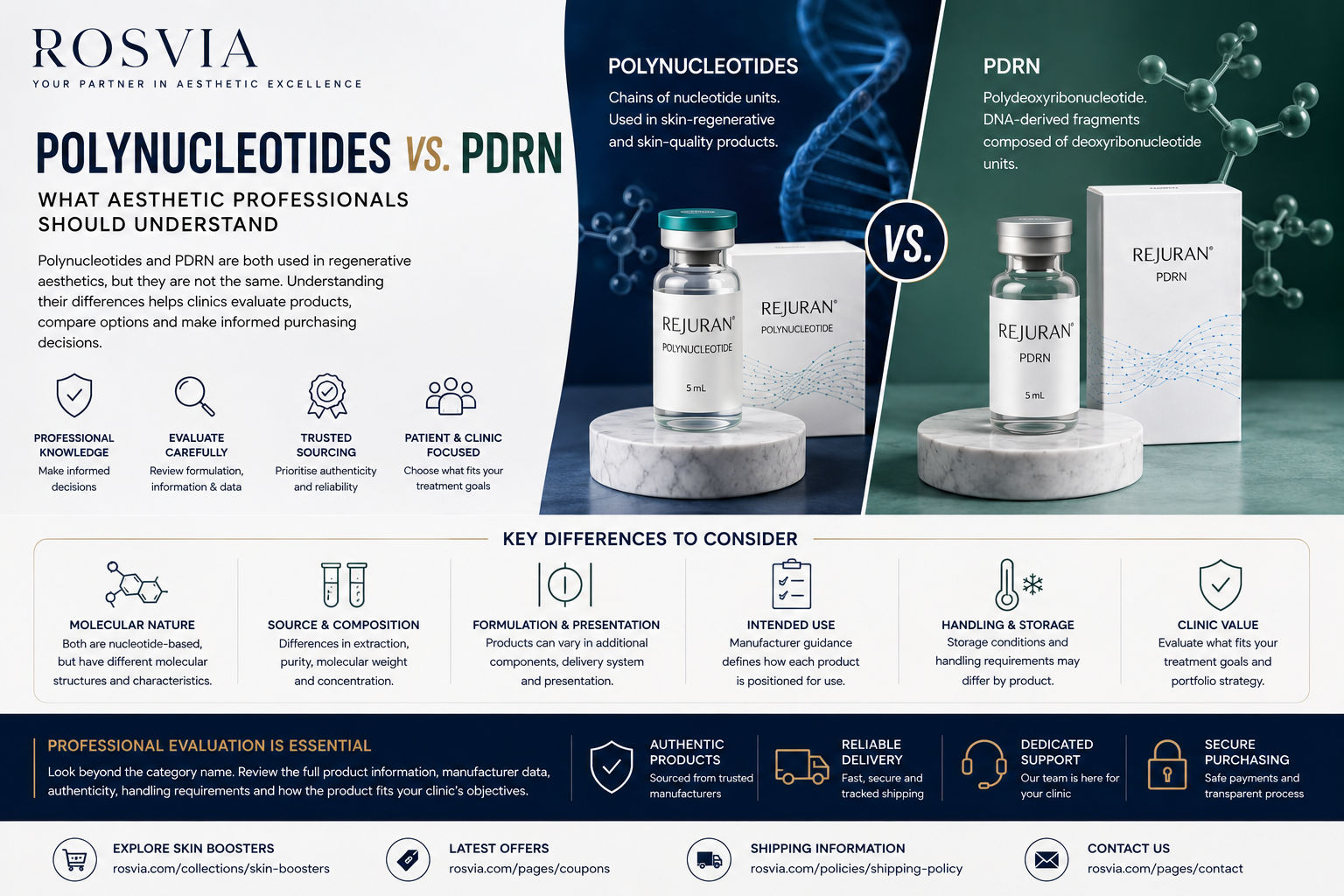
Polynucleotides and PDRN have become increasingly visible within professional discussions around regenerative aesthetics and skin-quality treatments. Because the terms are sometimes used closely together, it can be easy to assume that they describe exactly the same type of formulation.
For aesthetic professionals, however, understanding the terminology is only the beginning. Individual products can differ in composition, formulation, concentration, presentation, intended use, and manufacturer guidance, making product-specific evaluation essential when comparing options for a clinic.
In This Article
- What are polynucleotides?
- What is PDRN?
- Polynucleotides vs. PDRN: understanding the distinction
- Why product formulation matters
- What clinics should evaluate
- How they fit into a professional portfolio
- Final thoughts
What Are Polynucleotides?
Polynucleotides are chains composed of multiple nucleotide units. Within professional aesthetics, the term is commonly encountered in discussions surrounding regenerative-focused and skin-quality formulations.
However, “polynucleotide” describes a broad molecular category rather than one standard aesthetic product. Products described as polynucleotide-based can therefore differ according to their formulation, concentration, manufacturing process, presentation, and intended professional use.
Professional buyers exploring this category can review Rosvia's Skin Boosters collection, which includes different skin-quality and regenerative-focused product options.
What Is PDRN?
PDRN stands for polydeoxyribonucleotide and refers to DNA-derived fragments composed of deoxyribonucleotide units. The term is frequently encountered alongside polynucleotides within regenerative aesthetics, which can contribute to confusion between the two categories.
Although the terminology is related, professionals should not assume that every product described using PN or PDRN terminology has an identical composition or should be evaluated in exactly the same way.
The specific product formulation and official manufacturer information remain more useful for professional decision-making than the category name alone.
Polynucleotides vs. PDRN: Understanding the Distinction
The relationship between polynucleotides and PDRN can appear complicated because both terms relate to nucleotide-based materials and are frequently discussed within the same area of professional aesthetics.
For clinics, the practical distinction is that PN and PDRN terminology should not be used as a shortcut for assuming product equivalence. Products may differ in molecular characteristics, composition, concentration, processing, presentation, and manufacturer-defined intended use.
This means a comparison should move beyond asking whether a product is labelled “PN” or “PDRN” and instead examine what the individual formulation actually contains and how the manufacturer positions it for professional use.
Why Product Formulation Matters
Headline ingredients are useful for identifying a product category, but they do not provide a complete picture of an aesthetic formulation.
Two products associated with nucleotide-based aesthetics may have different specifications, concentrations, additional components, presentations, and professional applications. These differences can influence where each product fits within a clinic's existing range.
Products within the Rejuran range illustrate why professional buyers should review individual product information rather than treating every regenerative-focused formulation as interchangeable.
What Clinics Should Evaluate
When comparing PN and PDRN products, clinics can begin by reviewing the complete formulation and the information supplied by the manufacturer. Composition, concentration, presentation, intended professional use, storage requirements, and handling guidance can all form part of the evaluation.
Professionals should also consider whether the product provides a distinct role within the clinic's existing portfolio. Introducing several products with highly similar purposes can increase inventory complexity without necessarily increasing treatment flexibility.
Authenticity and dependable sourcing should form part of this evaluation as well, particularly when purchasing specialised professional aesthetic products.
How They Fit Into a Professional Portfolio
PN and PDRN-based products can form part of a broader professional skin-quality and regenerative aesthetics portfolio alongside other categories such as hyaluronic acid skin boosters and exosome-based formulations.
The objective does not need to be stocking every available technology. Clinics can instead select products with clearly defined roles based on practitioner requirements, treatment objectives, product information, and genuine clinic demand.
This creates a more purposeful product range and allows regenerative aesthetics purchasing to develop gradually alongside the clinic's services.
Final Thoughts
Polynucleotides and PDRN are closely related terms within the growing regenerative aesthetics conversation, but professionals should not automatically treat the terminology or the products associated with it as interchangeable.
Understanding the category is useful, but evaluating the individual formulation remains essential. Composition, concentration, manufacturer information, intended use, handling requirements, and the role of the product within the clinic's existing portfolio all contribute to a more informed professional decision.
Rosvia supports licensed aesthetic professionals with carefully selected skin-quality and regenerative-focused products from established manufacturers, dependable fulfilment, transparent product information, and dedicated professional purchasing support.
Browse Rosvia's Skin Boosters collection, explore current opportunities on the Offers Page, review delivery information in the Shipping Policy, or contact our team through the Contact Page for professional purchasing assistance.