What Are Skin Boosters? Understanding Their Composition and Categories

Skin boosters are a broad category of aesthetic products commonly associated with skin quality and hydration-focused formulations. The term is used across professional aesthetics to describe products containing ingredients such as hyaluronic acid, polynucleotides, polydeoxyribonucleotides (PDRN), and other specialised substances.
However, skin boosters do not represent one universally defined pharmaceutical or regulatory classification. Products marketed under this term can differ significantly in their composition, intended purpose, presentation, and regulatory status. This article explores the main ingredient categories and scientific terminology associated with skin boosters from an educational perspective.
In This Article
- What Are Skin Boosters?
- How Skin Booster Products Are Classified
- Hyaluronic Acid-Based Skin Boosters
- Polynucleotide Formulations
- Understanding PDRN Formulations
- Exosome-Based Aesthetic Products
- Combination Formulations
- Different Product Presentations
- Regulatory Differences Between Products
- Skin Booster Ingredient Comparison
- Final Thoughts
What Are Skin Boosters?
The term "skin booster" is widely used within the aesthetic industry to describe products developed around skin-related formulation concepts.
Unlike a single chemical ingredient or pharmaceutical substance, the term encompasses several different types of products.
Some formulations contain hyaluronic acid, while others feature nucleic acid-derived substances, peptides, vitamins, or combinations of ingredients.
The terminology used to describe these products may differ between manufacturers and international markets.
As a result, the name "skin booster" alone does not establish a product's exact composition, regulatory classification, or authorised purpose.
Rosvia's Skin Boosters and Exosome Products collection represents part of this broader professional aesthetic product category.
How Skin Booster Products Are Classified
Skin booster products can be described according to several characteristics, including their primary ingredients, formulation type, physical presentation, and regulatory classification.
Ingredient-based categories commonly discussed in professional aesthetics include:
- Hyaluronic acid-based formulations
- Polynucleotide-based formulations
- Polydeoxyribonucleotide (PDRN) formulations
- Exosome-related or extracellular vesicle-based products
- Combination formulations containing multiple ingredients
These categories describe formulation concepts rather than universally standardised product classes.
Products within the same ingredient category may still differ in concentration, molecular characteristics, manufacturing processes, and authorised product information.
Hyaluronic Acid-Based Skin Boosters
Hyaluronic acid, commonly abbreviated as HA, is a naturally occurring glycosaminoglycan found in human connective tissues and the extracellular matrix.
Its molecular structure enables it to interact with water, making it an important ingredient in many cosmetic and aesthetic formulations.
Hyaluronic acid-based products can differ in molecular weight, concentration, chemical modification, and other formulation characteristics.
Some HA formulations are non-cross-linked, while others incorporate varying degrees of cross-linking.
These characteristics influence the physical properties of the finished material.
Hyaluronic acid is also used in other professional aesthetic product categories, including Hyaluronic Acid Fillers.
However, the presence of hyaluronic acid does not mean that all HA-containing products have the same intended purpose or regulatory status.
Polynucleotide Formulations
Polynucleotides are molecules composed of chains of nucleotide units.
Nucleotides are the building blocks of nucleic acids, including DNA and RNA.
Within aesthetic product development, the term "polynucleotide" is commonly used to describe formulations containing purified nucleic acid-derived materials.
Manufacturers may distinguish their formulations through characteristics such as molecular size distribution, concentration, source material, and purification processes.
These details can influence the physical and chemical identity of the finished product.
Because polynucleotide formulations are not identical across manufacturers, their specifications should be interpreted using the relevant product documentation.
Understanding PDRN Formulations
Polydeoxyribonucleotide, abbreviated as PDRN, is a term used for preparations containing DNA-derived fragments.
PDRN is frequently discussed alongside polynucleotides because both involve nucleic acid-derived materials.
However, the terminology is not always used consistently across commercial product descriptions.
Differences may exist in molecular size distribution, processing methods, concentration, and the way manufacturers define their ingredients.
For this reason, the labels "PN" and "PDRN" should not automatically be treated as interchangeable descriptions of an identical substance.
Manufacturer specifications and analytical information provide more useful context than the ingredient abbreviation alone.
Exosome-Based Aesthetic Products
Exosomes are a subtype of extracellular vesicles, which are small membrane-bound particles released by cells.
Extracellular vesicles are an active area of scientific research because they can contain proteins, lipids, and nucleic acids.
Within the aesthetic industry, some products are marketed using terminology associated with exosomes or extracellular vesicles.
However, commercial use of the word "exosome" does not necessarily establish that a formulation contains well-characterised, purified exosomes.
Products may differ in their biological source, manufacturing methods, analytical characterisation, and ingredient composition.
Scientific research into extracellular vesicles is ongoing, and product-specific claims require appropriate supporting evidence.
Regulatory treatment also varies between jurisdictions, particularly for products containing human- or animal-derived biological materials.
Rosvia's Exosome and Skin Booster collection includes products associated with this wider category.
Combination Formulations
Some aesthetic products contain more than one category of ingredient.
Combination formulations may include hyaluronic acid alongside peptides, vitamins, amino acids, or other substances.
These products are often described using commercial terms such as multi-ingredient boosters or complex formulations.
The presence of multiple ingredients does not automatically establish that a formulation is more effective or of higher quality than a single-ingredient product.
Instead, the composition of a combination product should be understood through its documented ingredient list, concentrations, and physicochemical characteristics.
Different combinations can produce different formulation properties, even when products share similar commercial descriptions.
Different Product Presentations
Skin booster products may be supplied in several physical presentations depending on their composition and intended market.
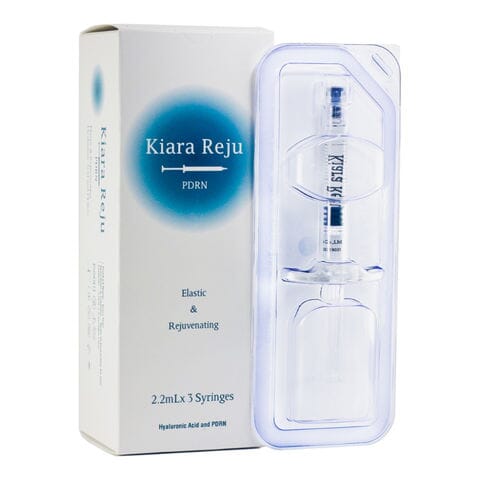
Examples include prefilled syringes, vials, ampoules, and topical cosmetic containers.
Some formulations are supplied as liquids, while others may be presented in a dried form.
Packaging information may identify the manufacturer, ingredient composition, batch number, expiry date, storage conditions, and regulatory details.
The presentation of a product does not independently determine whether it is a cosmetic, medical device, medicinal product, or another regulated category.
Its regulatory classification depends on applicable legislation, intended purpose, composition, and other jurisdiction-specific factors.
Regulatory Differences Between Products
One important distinction within the skin booster market is that products marketed using similar terminology may belong to different regulatory categories.
Depending on their characteristics and intended purpose, products may be regulated as cosmetics, medical devices, medicines, or other categories under national legislation.
For example, topical cosmetic formulations and products intended for administration into the body are not necessarily subject to the same regulatory framework.
Regulatory classification can also differ between countries.
A product marketed under a particular classification in one jurisdiction should not automatically be assumed to hold the same status elsewhere.
Similarly, a commercial description such as "skin booster" or "exosome-based" does not independently establish regulatory approval, clinical performance, or suitability for a particular use.
Skin Booster Ingredient Comparison
The following table summarises the main scientific characteristics associated with several commonly discussed skin booster ingredient categories.
| Ingredient Category | General Composition | Key Formulation Characteristics |
|---|---|---|
| Hyaluronic Acid (HA) | Glycosaminoglycan polymer | Molecular weight, concentration, cross-linking characteristics |
| Polynucleotides (PN) | Nucleotide-based polymer chains | Molecular size distribution, concentration, source material |
| Polydeoxyribonucleotide (PDRN) | DNA-derived fragments | Fragment distribution, purification, manufacturer terminology |
| Exosome-related products | Products marketed around extracellular vesicle concepts | Biological source, vesicle characterisation, ingredient verification |
| Combination formulations | Multiple ingredients within one formulation | Ingredient identity, concentrations, physicochemical compatibility |
These descriptions provide general scientific context. They do not establish equivalent regulatory status, clinical performance, or interchangeability between products.
Final Thoughts
Skin boosters represent a diverse group of aesthetic products rather than one universally defined pharmaceutical category.
Hyaluronic acid, polynucleotides, PDRN, extracellular vesicle-related materials, and combination formulations differ in their chemical composition, molecular characteristics, and manufacturing considerations.
Understanding these distinctions provides a clearer foundation for interpreting product descriptions and scientific terminology.
Because commercial names do not establish regulatory classification or clinical performance, product-specific manufacturer information and applicable regulatory documentation remain important sources of context.
This article is intended exclusively for general professional education. It does not provide treatment recommendations, administration instructions, clinical protocols, or prescribing guidance.
Rosvia provides licensed aesthetic professionals with access to professional aesthetic product categories and relevant product information. Explore our Skin Boosters and Exosome Products collection, learn more about Rosvia, or contact our team for professional product enquiries.