
Cart
0
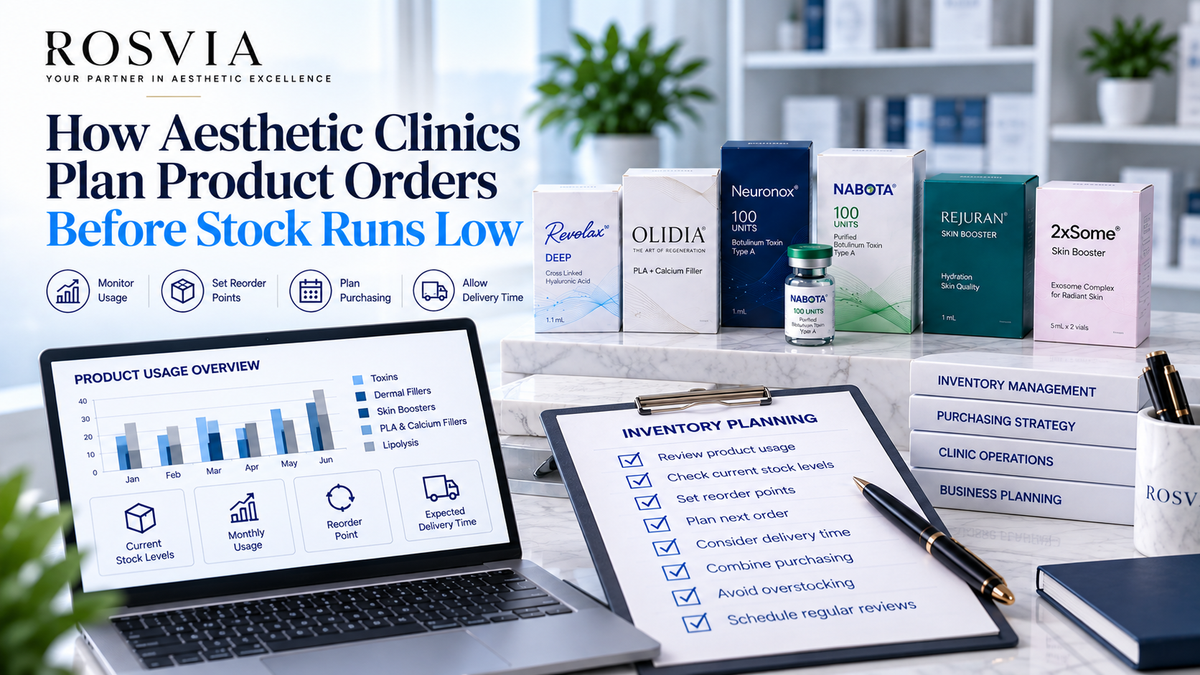
Running low on an important professional aesthetic product can create unnecessary pressure for a clinic. When purchasing only begins after stock reaches a critical level, buyers may have less time to compare products, organise an order, account for delivery, and prepare for upcoming professional requirements.
A more organised approach is to plan replenishment before products become critically low. By monitoring product usage, identifying core inventory, establishing practical reorder points, and allowing sufficient time for fulfilment, aesthetic clinics can create a purchasing routine that supports more consistent day-to-day operations.
In This Article
- Understand how products are being used
- Identify core and occasional products
- Establish practical reorder points
- Include delivery time in the plan
- Combine purchasing where it makes sense
- Avoid overstocking while planning ahead
- Create a regular stock review routine
- Use purchasing history to improve future orders
- Final Thoughts
Understand How Products Are Being Used
Effective reorder planning starts with understanding actual product usage. Rather than estimating what the clinic might require, purchasing teams can review how frequently individual products are used and how quickly existing stock moves.
Previous orders, inventory records, upcoming professional requirements, and current stock levels can all provide useful information. Over time, these records can reveal which products require frequent replenishment and which are purchased only occasionally.
This makes future purchasing less dependent on guesswork and provides a clearer foundation for aesthetic clinic inventory management.
Identify Core and Occasional Products
Not every professional aesthetic product needs to follow the same ordering schedule. Some products may form part of the clinic's core inventory, while others are required less frequently.
Core products generally deserve closer stock monitoring because running low can have a greater effect on normal clinic operations. More specialised or occasionally purchased products can instead be ordered according to actual requirements.
Clinics may maintain core inventory across categories such as Botulinum Toxins, Hyaluronic Acid Fillers, and Skin Boosters, depending on their professional requirements and purchasing patterns.
Establish Practical Reorder Points
A reorder point is the stock level at which a clinic begins preparing its next purchase rather than waiting until the product is almost completely depleted.
The appropriate reorder point will differ between products. Clinics can consider typical usage, current quantity, expected future requirements, supplier availability, and normal delivery time when deciding when replenishment should begin.
For example, a product that is purchased regularly may require an earlier reorder point than one that is only occasionally needed. The objective is not necessarily to maintain large quantities, but to provide enough time for the next order to arrive before existing inventory becomes insufficient.
Include Delivery Time in the Plan
Delivery time is an important part of inventory planning. A clinic may know exactly what it needs to reorder, but waiting too long to place the purchase can still create a stock gap while the order is being processed and delivered.
Professional buyers can therefore work backwards from expected product requirements. Normal order processing, dispatch, transportation, receiving, and any relevant handling procedures should be considered when establishing purchasing timelines.
Clinics ordering through Rosvia can review general dispatch and delivery information in the Shipping Policy when planning replenishment.
Combine Purchasing Where It Makes Sense
Regular stock reviews can reveal that several products are approaching their reorder points at similar times. Where appropriate, combining planned requirements into a more organised purchase may simplify procurement compared with repeatedly placing urgent individual orders.
This can be particularly useful for clinics maintaining products across several categories. Instead of monitoring dermal fillers, skin boosters, and other professional products as completely separate purchasing activities, buyers can review the overall inventory before preparing an order.
For clinics with larger or recurring purchasing requirements, Rosvia also provides a Wholesale option for professional purchasing enquiries.
Avoid Overstocking While Planning Ahead
Planning ahead does not mean maintaining excessive quantities of every product. Overstocking can increase inventory complexity and tie purchasing budgets to products that may not be required as quickly as expected.
Product-specific storage requirements and applicable shelf-life information should also be considered when determining appropriate stock quantities.
A stronger approach is to maintain enough inventory to support expected requirements while allowing sufficient time for replenishment. Core products may justify a larger operational buffer, while specialised products can be purchased more selectively.
Create a Regular Stock Review Routine
Reorder planning becomes easier when stock reviews happen routinely rather than only when someone notices that a product is running low.
A clinic can establish a regular inventory check where current quantities, upcoming requirements, products approaching reorder points, and outstanding purchases are reviewed together.
This does not need to become a complicated administrative process. A consistent weekly or periodic review can provide enough visibility to identify purchasing requirements before they become urgent.
Use Purchasing History to Improve Future Orders
Every completed purchasing cycle provides information that can improve the next one. Clinics can compare what they expected to use with what was actually required and adjust future stock levels accordingly.
If a product repeatedly reaches its reorder point earlier than expected, the clinic may need to review the quantity normally maintained or how frequently it is purchased. If another product consistently remains in inventory for longer periods, future quantities may need to be reconsidered.
Over time, this creates a purchasing system based increasingly on the clinic's own activity rather than general assumptions about product demand.
Final Thoughts
Planning aesthetic product orders before stock runs low can help clinics move away from reactive purchasing and toward more organised inventory management. Understanding product usage, separating core and occasional inventory, establishing reorder points, and accounting for delivery time all contribute to a more predictable purchasing process.
The objective is not to hold as much stock as possible. Instead, clinics can maintain appropriate quantities, monitor them consistently, and begin replenishment early enough to support their professional requirements without creating unnecessary inventory.
Rosvia supports licensed aesthetic professionals with organised product collections, dependable fulfilment, professional purchasing support, and access to a broad range of products for ongoing clinic requirements.
Explore Rosvia's Botulinum Toxins, Hyaluronic Acid Fillers, and Skin Boosters, review current opportunities on the Offers Page, check delivery information in the Shipping Policy, or contact Rosvia for professional purchasing assistance.