Hyaluronic Acid vs Polynucleotides: Understanding the Formulation Differences
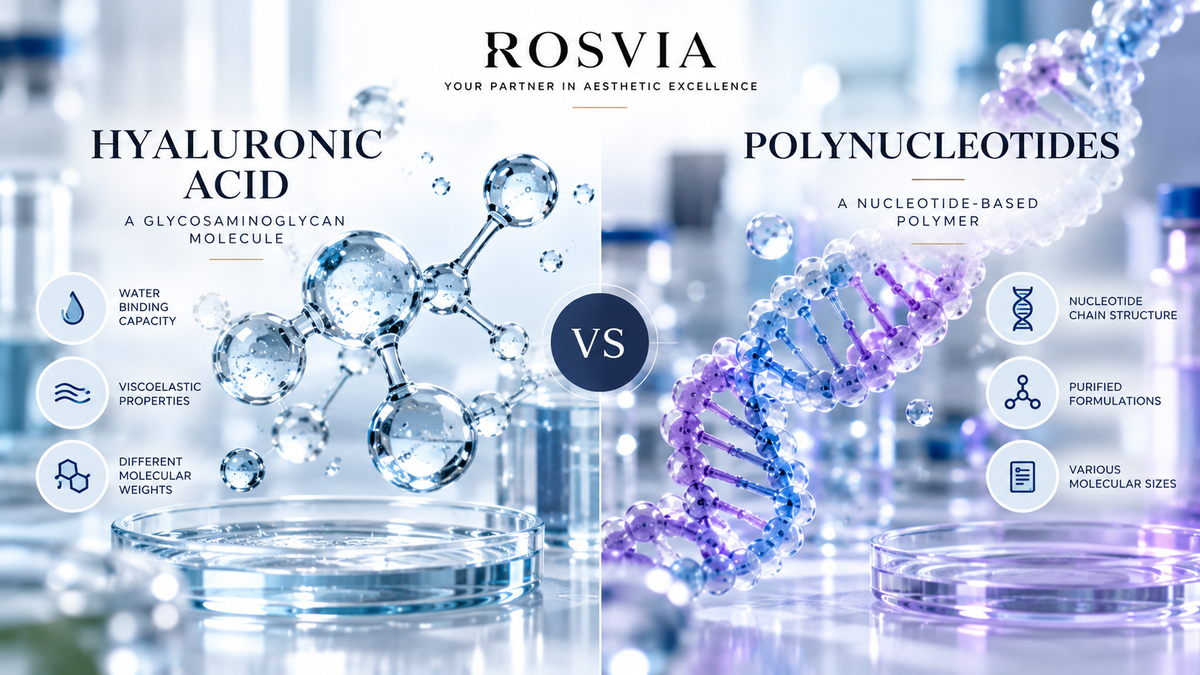
Hyaluronic acid (HA) and polynucleotides (PN) are two ingredient categories frequently discussed in professional aesthetic product development. Although both appear in products marketed within the broader skin booster category, they are chemically distinct substances with different molecular structures and formulation characteristics.
Understanding these differences provides useful scientific context for interpreting ingredient descriptions and manufacturer specifications. This article compares hyaluronic acid and polynucleotides from a formulation perspective, focusing on their composition, molecular properties, manufacturing considerations, and product presentations rather than clinical applications.
In This Article
- Understanding HA and PN
- Hyaluronic Acid: Molecular Composition
- Polynucleotides: Molecular Composition
- Key Molecular Structure Differences
- Formulation Properties and Characteristics
- Manufacturing and Purification Considerations
- Product Presentations and Packaging
- HA vs PN: Ingredient Comparison
- Interpreting Manufacturer Product Information
- Final Thoughts
Understanding HA and PN
Hyaluronic acid and polynucleotides belong to different classes of biological molecules.
Hyaluronic acid is a glycosaminoglycan, a type of carbohydrate-based polymer naturally present in the extracellular matrix of many tissues.
Polynucleotides are chains of nucleotides, the molecular building blocks of nucleic acids such as DNA and RNA.
Although both may be incorporated into professional aesthetic formulations, they should not be considered chemically equivalent.
Their molecular structures, ingredient specifications, and formulation behaviour differ substantially.
Hyaluronic Acid: Molecular Composition
Hyaluronic acid is composed of repeating disaccharide units containing D-glucuronic acid and N-acetyl-D-glucosamine.
These repeating units form long polymer chains that interact strongly with water.
Hyaluronic acid is commonly described as a hydrophilic molecule because of its affinity for water.
Within pharmaceutical and cosmetic formulation science, HA can be characterised by several properties, including molecular weight, concentration, viscosity, and chemical modification.
Some formulations contain non-cross-linked HA, while others incorporate cross-linked forms.
Cross-linking changes the organisation of polymer chains and can influence the physical properties of the finished material.
HA is used in multiple product categories, including Hyaluronic Acid Fillers and certain products marketed as skin boosters.
Polynucleotides: Molecular Composition
Polynucleotides are polymers made of nucleotide units linked together through phosphodiester bonds.
Each nucleotide contains a sugar component, a phosphate group, and a nitrogen-containing base.
The chemical identity of a polynucleotide depends on factors such as its nucleotide composition, chain length, and molecular structure.
In aesthetic product terminology, PN commonly refers to purified nucleic acid-derived materials used in specialised formulations.
Manufacturers may describe PN ingredients according to their molecular size distribution, concentration, source material, and purification characteristics.
Because these specifications can differ between products, the abbreviation PN does not independently define one universally standardised formulation.
Key Molecular Structure Differences
The most fundamental difference between HA and PN lies in their molecular composition.
Hyaluronic acid is a carbohydrate-based polymer composed of repeating sugar-derived units.
Polynucleotides, by contrast, are nucleic acid polymers composed of linked nucleotides.
These structural differences influence the chemical and physical properties of each material.
For example, HA is widely characterised by its water-binding behaviour and polymer rheology.
PN materials are more commonly described in terms of nucleic acid composition, molecular size distribution, and other polymer characteristics.
Neither ingredient category can be fully described by its commercial name alone.
Formulation Properties and Characteristics
Formulation properties describe how ingredients behave within a finished product.
For HA-based formulations, relevant characteristics may include concentration, molecular weight, viscosity, elasticity, and the presence or absence of cross-linking.
For PN-based formulations, manufacturers may specify concentration, molecular size distribution, purity, and the characteristics of the nucleic acid material.
Both ingredient categories can be incorporated into aqueous formulations, but their behaviour depends on the complete composition of the finished product.
Excipients, processing methods, and other formulation components can influence the physical characteristics of a product.
Therefore, two products containing the same broad ingredient category may still have different physicochemical properties.
Manufacturing and Purification Considerations
Hyaluronic acid and polynucleotide ingredients can originate from different manufacturing and processing systems.
Commercial hyaluronic acid is frequently produced through microbial fermentation, although manufacturing methods can vary.
Polynucleotide ingredients may be obtained from biological source materials and subsequently processed and purified.
The source and processing history of an ingredient can influence its specifications and the quality-control information associated with it.
Manufacturers may assess characteristics such as identity, purity, molecular distribution, and other relevant attributes.
These considerations form part of ingredient characterisation rather than evidence that one category is inherently superior to the other.
Product Presentations and Packaging
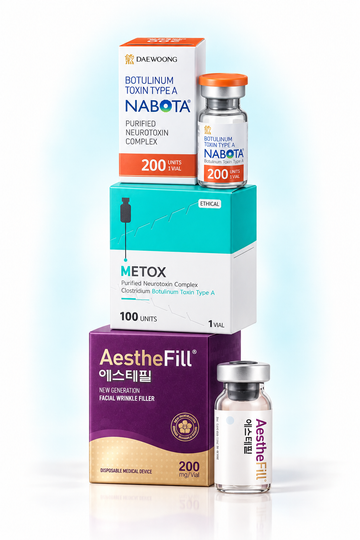
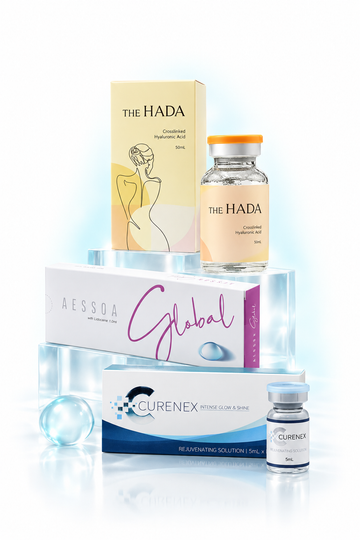
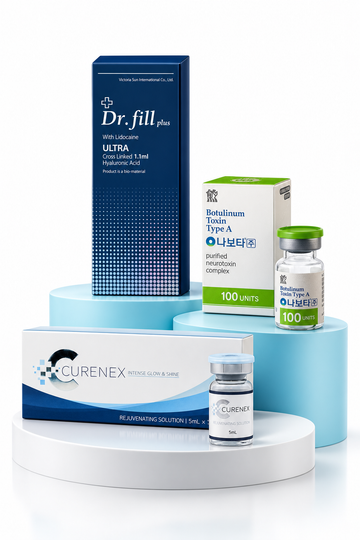
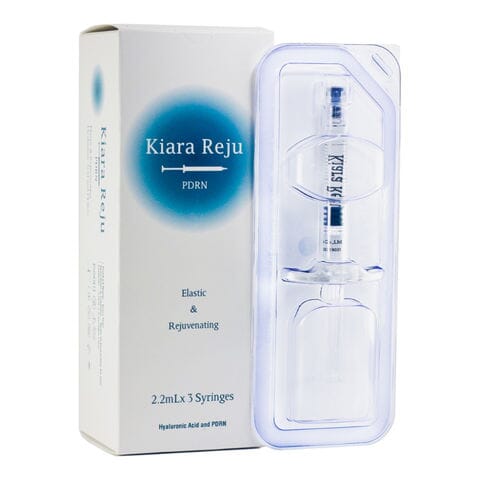
HA- and PN-based aesthetic products may be supplied in different packaging formats.
Depending on the product and regulatory category, presentations can include prefilled syringes, vials, ampoules, and other containers.
Packaging may display the manufacturer, product name, ingredient information, batch identifier, expiry date, and storage requirements.
The physical presentation does not independently determine a product's regulatory classification.
Products marketed using similar aesthetic terminology may be regulated differently according to their composition, intended purpose, and jurisdiction.
For this reason, manufacturer documentation and applicable regulatory information provide important context when interpreting product descriptions.
HA vs PN: Ingredient Comparison
The following table summarises the principal scientific differences between hyaluronic acid and polynucleotides.
| Characteristic | Hyaluronic Acid (HA) | Polynucleotides (PN) |
|---|---|---|
| Molecular category | Glycosaminoglycan | Nucleic acid polymer |
| Basic structural units | Repeating disaccharides | Linked nucleotides |
| Commonly described properties | Water interaction, viscosity, rheology | Molecular size distribution, nucleic acid composition |
| Ingredient specifications | Molecular weight, concentration, cross-linking characteristics | Concentration, molecular distribution, purity |
| Manufacturing considerations | Frequently microbial fermentation | Biological sourcing and purification may be involved |
| Product categories | Cosmetics, fillers, and certain skin boosters | Specialised nucleic acid-based aesthetic formulations |
| Regulatory classification | Product- and jurisdiction-dependent | Product- and jurisdiction-dependent |
This comparison describes general ingredient characteristics. It does not establish equivalent clinical performance, regulatory status, or interchangeability between finished products.
Interpreting Manufacturer Product Information
Manufacturer product information may describe HA and PN formulations using different technical terminology.
For HA products, descriptions may emphasise concentration, molecular weight, cross-linking technology, and rheological characteristics.
For PN products, descriptions may focus on nucleic acid concentration, molecular distribution, purification, and source material.
These terms help describe the identity and physical properties of a formulation.
However, marketing descriptions alone do not establish a product's regulatory authorisation, clinical performance, or equivalence to another formulation.
Official manufacturer documentation and applicable regulatory records provide the appropriate context for understanding individual products.
Final Thoughts
Hyaluronic acid and polynucleotides are chemically distinct ingredient categories used in different types of professional aesthetic formulations.
HA is a glycosaminoglycan composed of repeating sugar-derived units, while PN materials consist of nucleotide-based polymer chains.
Their molecular structures, physicochemical characteristics, manufacturing considerations, and ingredient specifications differ.
Understanding these differences provides useful scientific context for interpreting product descriptions without assuming that formulations containing different ingredients are directly comparable or interchangeable.
This article is intended exclusively for general professional education. It does not provide treatment recommendations, administration instructions, clinical protocols, or prescribing guidance.
Rosvia provides licensed aesthetic professionals with access to professional aesthetic product categories and relevant product information. Explore our Skin Boosters and Hyaluronic Acid Fillers collections, learn more about Rosvia, or contact our team for professional product enquiries.