
Einkaufswagen
0
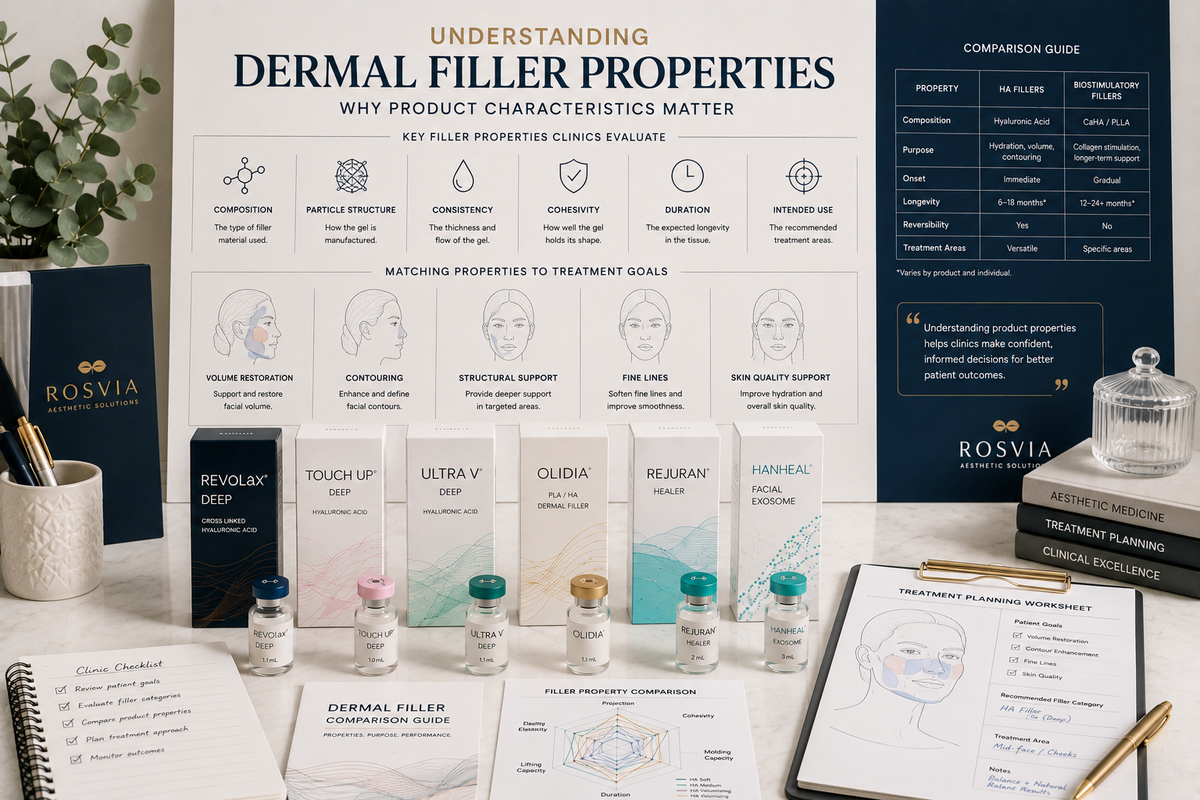
Understanding Dermal Filler Properties: Why Product Characteristics Matter
Choosing a dermal filler involves more than selecting a recognised brand. Professional aesthetic clinics often evaluate a range of product characteristics when planning treatments, building inventory, and expanding their treatment portfolio. Understanding these differences helps practitioners organise products more effectively and make informed purchasing decisions.
Rather than viewing all dermal fillers as interchangeable, clinics typically compare product categories based on how they fit within broader treatment planning and patient needs.
In This Article
- Why product characteristics matter
- Looking beyond the brand name
- How clinics compare dermal fillers
- Building a balanced filler portfolio
- Working with organised product categories
- Final thoughts
Why Product Characteristics Matter
Professional treatment planning starts with understanding the intended treatment goal. From there, practitioners evaluate product characteristics that may support different aesthetic objectives. This structured approach allows clinics to organise their product selection while maintaining flexibility across a variety of treatments.
Understanding product characteristics also supports long-term purchasing strategies by helping clinics build a balanced and well-organised dermal filler portfolio.
Looking Beyond the Brand Name
While brand recognition is important, experienced practitioners often look beyond the label itself. Clinics compare product categories, available formulations, intended applications, and how different fillers complement one another within a complete treatment portfolio.
Rosvia offers a wide selection of Hyaluronic Acid Fillers alongside products from the PLA & Calcium Fillers collection, giving clinics access to multiple dermal filler categories through one professional supplier.
How Clinics Compare Dermal Fillers
Every clinic develops its own purchasing strategy, but many compare dermal fillers using consistent criteria such as treatment goals, product category, portfolio balance, supplier reliability, and overall clinic demand. This allows practitioners to make purchasing decisions that support both everyday treatments and long-term business planning.
Products including Revolax Deep, Touch Up, and OLIDIA illustrate the variety available across Rosvia's dermal filler collections, helping clinics build portfolios that reflect different treatment goals.
Building a Balanced Filler Portfolio
Rather than focusing on one filler category alone, many clinics create a portfolio that includes complementary products capable of supporting a wider range of aesthetic procedures. A balanced approach improves treatment flexibility while making inventory planning more predictable.
Regular portfolio reviews also help clinics adapt to changing patient demand and emerging treatment trends without compromising operational efficiency.
Working with Organised Product Categories
Having access to organised product collections simplifies both purchasing and treatment planning. Clinics can browse Rosvia's complete Dermal Fillers collections, review the Current Offers, explore fulfilment details in the Shipping Policy, or contact the team through the Contact Page for personalised support.
Final Thoughts
Understanding dermal filler properties helps clinics make informed purchasing decisions while building treatment portfolios that support a wide variety of patient needs. By evaluating product characteristics alongside treatment goals, practitioners can develop organised workflows, improve inventory planning, and prepare confidently for future growth.
Rosvia supports licensed professionals with authentic dermal fillers, organised product collections, and reliable professional support, helping clinics build flexible and well-balanced treatment portfolios.