
Cart
0
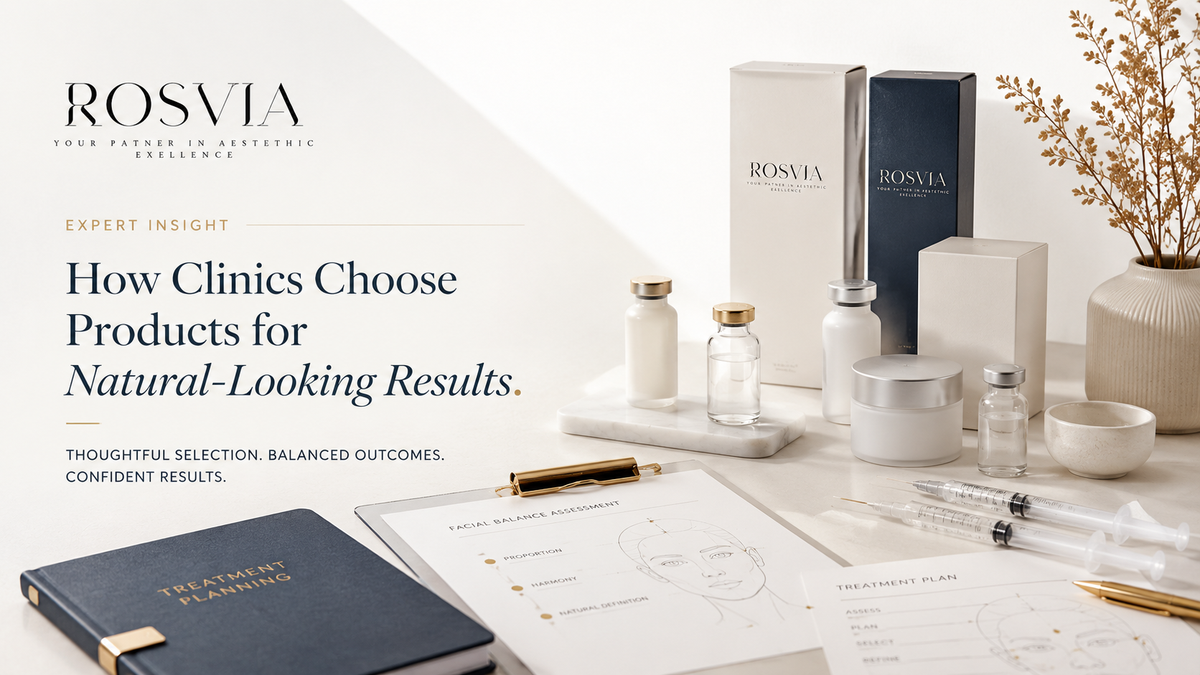
Natural-looking results are one of the most important goals in modern aesthetic practice. For clinics, this means selecting products that support balance, proportion, skin quality, and subtle enhancement rather than creating an overfilled or exaggerated appearance.
Professional product choice depends on the treatment area, client goals, product structure, and the practitioner’s planning approach. When clinics understand how different product categories support natural-looking outcomes, treatment planning becomes more precise and more consistent.
In this article
- Why natural-looking results matter
- Choosing fillers for balance and structure
- Using skin boosters for subtle skin quality
- Where botulinum toxins fit into natural results
- Why product texture and treatment area matter
- Building a professional product selection routine
- Final thoughts
Why natural-looking results matter
Many clients today prefer aesthetic treatments that refresh their appearance while still preserving natural facial movement and individual features. This creates a greater need for clinics to choose products carefully and avoid using one product type for every concern.
Natural-looking treatment planning usually focuses on proportion, gradual improvement, skin quality, and facial harmony. Clinics may combine different product categories depending on whether the goal is volume support, hydration, texture improvement, contour refinement, or expression-related maintenance.
Choosing fillers for balance and structure
Dermal fillers are often considered when clinics want to support volume, structure, contour, or facial balance. The right filler choice depends on the treatment area and the type of correction required. A product selected for subtle lip refinement may not be the same as one used for cheek support or deeper contour planning.
Professional buyers can review Rosvia’s dermal fillers, hyaluronic acid fillers, and European fillers when comparing options for different levels of structure, softness, and treatment planning needs.
For clinics reviewing filler options, products such as OLIDIA may be considered as part of broader professional planning, depending on the treatment goal, product preference, and practitioner protocol.
Using skin boosters for subtle skin quality
Natural-looking results are not always about adding volume. In many cases, the goal is to improve the appearance of skin quality, hydration, texture, and radiance. This is where skin boosters can become an important part of professional treatment planning.
Skin boosters are often reviewed when clinics want to support a refreshed look without focusing mainly on structural correction. Rosvia’s skin booster category includes professional products that may support skin-quality focused protocols for hydration, glow, and overall skin freshness.
Products such as HANHEAL Facial Exosome, CLAIR EYES, and 2XSOME Skin Booster may be reviewed by clinics preparing treatment options that focus on subtle skin improvement and refreshed appearance.
Where botulinum toxins fit into natural results
Botulinum toxins play a different role from fillers and skin boosters. They are commonly considered in professional planning related to facial movement, expression lines, and maintenance-focused treatments.
When used within appropriate professional protocols, toxin planning can support a refreshed appearance while still respecting natural facial expression. This is why clinics often review toxin products separately from filler and booster categories.
Professional buyers can explore Rosvia’s botulinum toxins category when planning toxin-related stock. Products such as BOTULAX 300 Units and Rentox 100 Units may be reviewed depending on clinic preferences and treatment planning needs.
Why product texture and treatment area matter
Product texture, density, and behaviour all influence how natural a result may appear. Softer products may be preferred for delicate correction or skin-quality support, while more structured products may be reviewed for areas that require lift, contour, or deeper support.
Treatment area also matters. Lips, cheeks, jawline, chin, under-eye areas, and broader skin-quality protocols each require a different planning approach. Clinics that understand these differences can make better product decisions and reduce the risk of choosing a product that does not match the intended result.
Building a professional product selection routine
A professional product selection routine helps clinics stay consistent. Instead of choosing products only based on availability or price, clinics can review treatment goals, client expectations, product category, treatment area, and supplier reliability together.
Working with a supplier that organises product categories clearly can also support this process. Clinics can review Rosvia’s product collections, current campaign details on the Rosvia Current Offers page, or reach the team through the Rosvia contact page for product selection and larger order support.
Final thoughts
Natural-looking aesthetic results begin with thoughtful product selection. Dermal fillers, skin boosters, and botulinum toxins each support different professional treatment goals, so clinics benefit from matching the right product category to the right concern.
Rosvia supports clinics and licensed professionals with organised aesthetic product categories, reliable sourcing, and professional buyer support. For clinics focused on refined, balanced, and natural-looking treatment planning, careful product choice remains one of the most important parts of long-term clinical confidence.