Understanding the Global Aesthetic Product Supply Chain
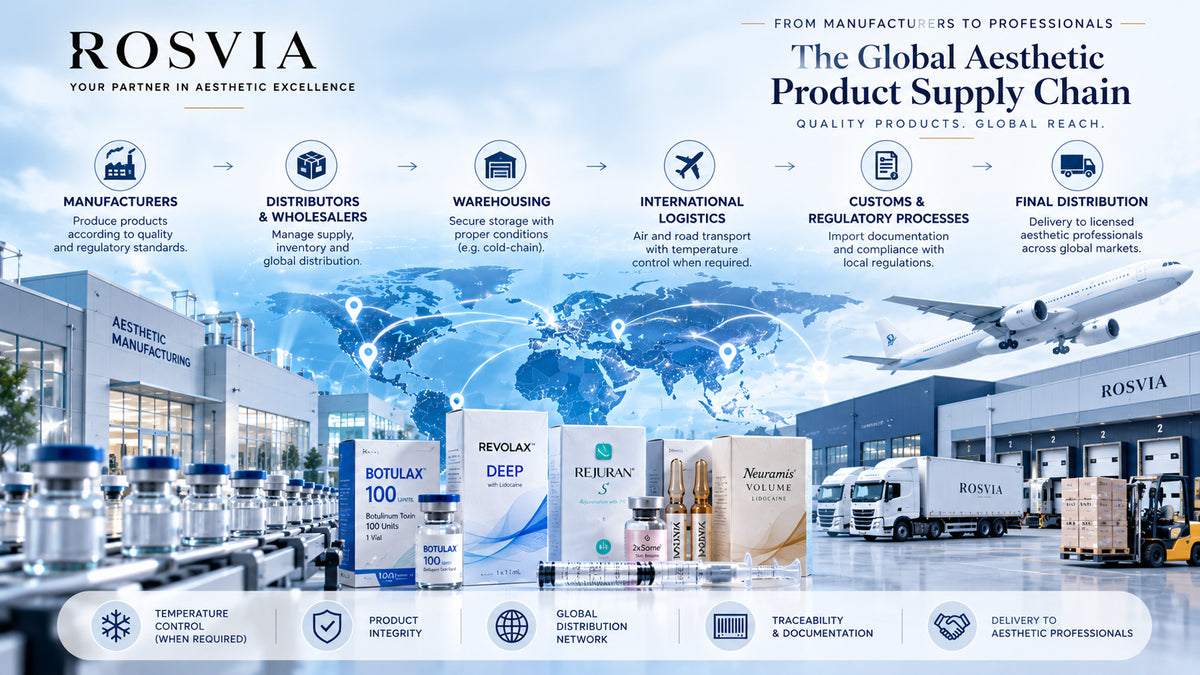
The professional aesthetics industry operates within an international supply chain connecting pharmaceutical manufacturers, medical device producers, distributors, logistics companies, and professional buyers. Products such as botulinum toxin formulations, hyaluronic acid fillers, and skin boosters may move through several organisations and geographic regions before reaching their final destination.
Understanding how these supply chains are structured provides useful insight into international product distribution, traceability, documentation, and logistics. This article explores the main participants and processes involved in the global aesthetic product supply chain from an educational and business perspective.
In This Article
- What Is the Global Aesthetic Product Supply Chain?
- The Role of Product Manufacturers
- Distributors and Wholesale Networks
- International Logistics and Transportation
- Temperature-Sensitive Product Distribution
- Warehousing and Inventory Systems
- Documentation and Product Traceability
- Regulatory and Customs Considerations
- Challenges in Global Supply Chains
- Supply Chain Participants at a Glance
- Final Thoughts
What Is the Global Aesthetic Product Supply Chain?
A supply chain is the network of organisations, activities, and resources involved in producing and distributing goods.
In professional aesthetics, supply chains may connect manufacturers of pharmaceutical products, medical devices, and cosmetics with distributors and professional purchasers in different countries.
Because these product categories are regulated differently, their distribution requirements are not necessarily identical.
Some products move directly from manufacturers to authorised distributors, while others pass through additional wholesale or logistics organisations.
The structure of a supply chain depends on the product category, geographic market, commercial arrangements, and applicable regulations.
The Role of Product Manufacturers
Manufacturers are responsible for producing finished products according to their established specifications and applicable quality requirements.
Within professional aesthetics, manufacturers may specialise in biological pharmaceuticals, hyaluronic acid-based formulations, medical devices, or cosmetic products.
South Korea is one of the countries associated with the development and manufacture of several internationally recognised aesthetic product brands.
Other important manufacturing regions include parts of Europe and North America.
Manufacturers establish product identities through formulation specifications, packaging, batch information, and technical documentation.
These characteristics remain relevant as products move through subsequent stages of distribution.
Distributors and Wholesale Networks
Distributors and wholesalers connect manufacturers with commercial buyers and other participants in the supply chain.
Their activities may include sourcing, inventory management, order processing, and coordinating product distribution.
In regulated pharmaceutical supply chains, wholesale distribution may require specific authorisations and compliance with applicable Good Distribution Practice requirements.
Medical devices and cosmetics are subject to different legal frameworks and distributor responsibilities.
Consequently, the term "distributor" describes a commercial function but does not imply that all organisations operate under identical regulatory obligations.
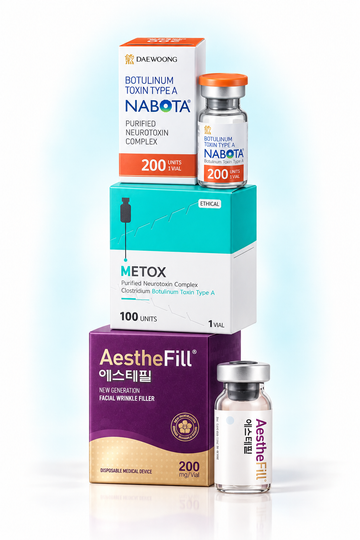
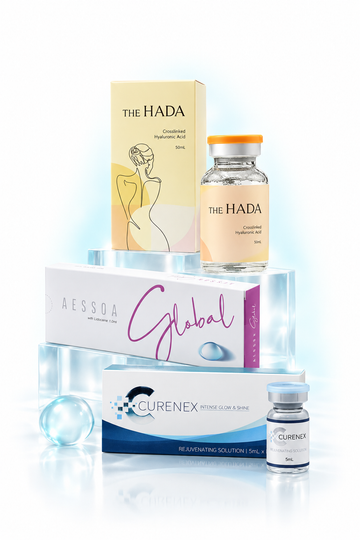
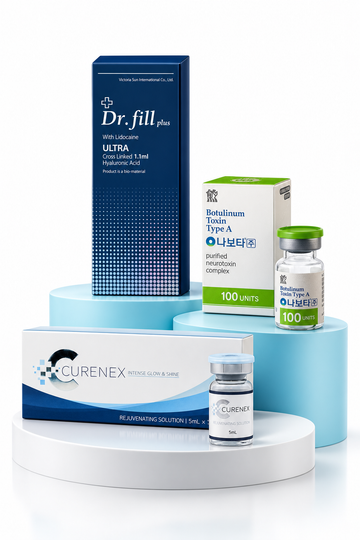
Rosvia provides professional aesthetic product categories through its online catalogue, including Botulinum Toxins and Hyaluronic Acid Fillers.
International Logistics and Transportation
International logistics involves the movement of products between countries and distribution locations.
Depending on the shipment and commercial arrangement, transportation may involve air freight, road transport, or multiple logistics providers.
Products can move through logistics hubs, distribution centres, and customs facilities before reaching their destination.
Transit times may be influenced by transport routes, customs procedures, geographic distance, and operational conditions.
International shipping therefore involves more than the physical movement of a package. It also includes coordination between organisations and documentation systems.
Temperature-Sensitive Product Distribution
Some professional aesthetic products have manufacturer-defined temperature requirements.
These requirements may be particularly relevant for certain biological pharmaceuticals, although storage and transport specifications differ between individual products.
Temperature-controlled distribution systems are designed to maintain defined environmental conditions during relevant stages of transportation.
Such systems may involve insulated packaging, temperature-control materials, monitoring technologies, and documented logistics procedures.
The specific requirements depend on the product's approved stability information and applicable distribution standards.
Not every aesthetic product requires refrigerated transportation, and a single temperature range should not be assumed to apply across all product categories.
Warehousing and Inventory Systems
Warehousing is another important part of international product distribution.
Distribution facilities may receive, identify, store, and organise products before they move to another stage of the supply chain.
Inventory systems can record information such as product identity, quantity, batch number, and expiry date.
Different products may have different environmental and handling requirements.
Warehouse operations are therefore influenced by the types of products being stored and the regulations applicable to those categories.
Inventory documentation also contributes to traceability across the wider distribution network.
Documentation and Product Traceability
Product traceability refers to the ability to identify and follow products through relevant stages of the supply chain.
Depending on the product category, traceability systems may use batch numbers, serial numbers, product identifiers, and distribution records.
Batch identifiers connect products with defined manufacturing groups.
Shipping and distribution documentation may also record relevant commercial and logistical information.
For certain regulated products, additional identification and verification requirements apply.
These systems help distinguish products and document their movement, although the exact requirements differ between pharmaceuticals, medical devices, and cosmetics.
Regulatory and Customs Considerations
International distribution is influenced by the laws and regulatory requirements of the countries involved.
Pharmaceutical products may be subject to import authorisations, wholesale distribution rules, and other medicinal product requirements.
Medical devices and cosmetics operate under separate regulatory frameworks.
Customs processes may also require commercial invoices, product descriptions, declarations, and other relevant documentation.
The exact requirements depend on the product classification, country of origin, destination, and applicable trade rules.
A product's commercial availability in one market does not automatically establish its authorisation for sale or import in another jurisdiction.
Regulatory status must therefore be understood in relation to the specific product and destination market.
Challenges in Global Supply Chains
International aesthetic product supply chains can be affected by several operational factors.
Transportation Disruptions
Weather events, transport interruptions, and logistics capacity constraints may affect international shipping networks.
Regulatory Differences
Different countries may apply distinct requirements to the importation and distribution of pharmaceuticals, medical devices, and cosmetics.
Product-Specific Stability Requirements
Some formulations require controlled environmental conditions throughout relevant distribution stages.
Inventory Availability
Manufacturing schedules, distribution arrangements, and market demand can influence the availability of individual products.
These factors illustrate why international product distribution depends on coordination across multiple organisations and regulatory systems.
Supply Chain Participants at a Glance
The following table summarises the main participants commonly involved in professional aesthetic product supply chains.
| Participant | General Role |
|---|---|
| Manufacturer | Produces finished products according to defined specifications and quality systems |
| Distributor or wholesaler | Coordinates commercial distribution and product availability within applicable legal frameworks |
| Logistics provider | Organises transportation and shipment movement |
| Warehouse operator | Manages product storage, inventory identification, and distribution activities |
| Customs authority | Administers applicable import and export procedures |
| Regulatory authority | Oversees relevant product authorisation and regulatory requirements |
| Professional purchaser | Receives products within the applicable professional and regulatory framework |
The exact participants and distribution pathways vary between product categories and international markets.
Final Thoughts
The global aesthetic product supply chain connects manufacturers, distributors, logistics organisations, warehouses, and professional purchasers across international markets.
Its structure is influenced by product composition, regulatory classification, transportation requirements, documentation, and geographic distribution networks.
Understanding these elements provides useful context for interpreting how professional aesthetic products move between manufacturers and commercial markets.
Because pharmaceutical, medical device, and cosmetic products are subject to different requirements, supply chain practices must be understood within their respective regulatory frameworks.
This article is intended exclusively for general professional and industry education. It does not provide clinical, administration, or prescribing guidance.
Rosvia provides licensed aesthetic professionals with access to professional aesthetic product categories and relevant purchasing information. Explore our Botulinum Toxins, Hyaluronic Acid Fillers, and Skin Boosters collections. You can also learn more about Rosvia or review our Shipping Policy for information about our distribution services.