Understanding Professional Aesthetic Product Packaging and Presentations

Professional aesthetic products are supplied in a variety of packaging formats, including glass vials, prefilled syringes, ampoules, and other specialised containers. These formats are selected according to the characteristics of the finished product, its formulation, and applicable regulatory requirements.
Although packaging is often associated with visual presentation, it also plays an important role in product identification, protection, traceability, and pharmaceutical documentation. This article explores the main packaging formats found across professional aesthetic product categories and explains how they differ.
In This Article
- The Purpose of Aesthetic Product Packaging
- Primary and Secondary Packaging
- Understanding Pharmaceutical Vials
- Prefilled Syringe Presentations
- Ampoules and Other Containers
- Common Packaging Materials
- Labelling and Product Traceability
- Packaging Across Aesthetic Product Categories
- Regulatory and Market Differences
- Packaging Format Comparison
- Final Thoughts
The Purpose of Aesthetic Product Packaging
Packaging is an important component of the finished pharmaceutical, medical device, or cosmetic product.
Its functions may include containing the formulation, protecting it from external influences, supporting identification, and communicating relevant product information.
Packaging systems are developed according to the physical and chemical characteristics of the material they contain.
For example, liquid formulations, gels, and dried preparations may require different container designs and closure systems.
Packaging also provides a surface for displaying information such as product names, batch identifiers, expiry dates, and manufacturer details.
Primary and Secondary Packaging
Professional aesthetic products often use more than one level of packaging.
Primary Packaging
Primary packaging refers to the container or material that directly contacts the product.
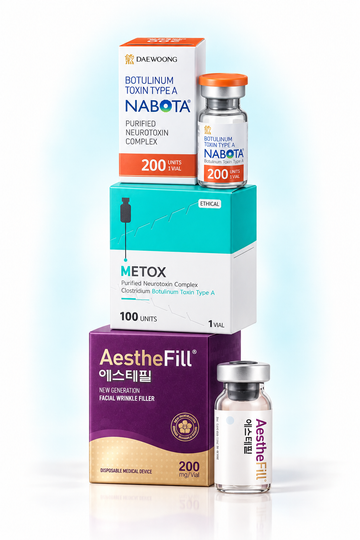
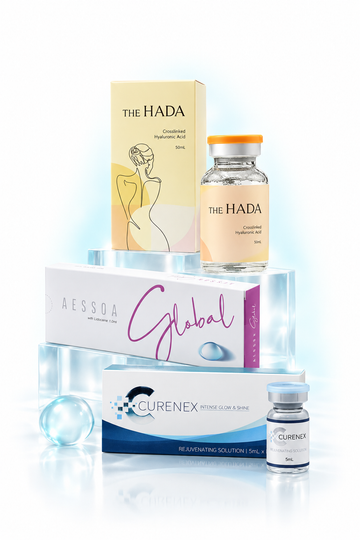
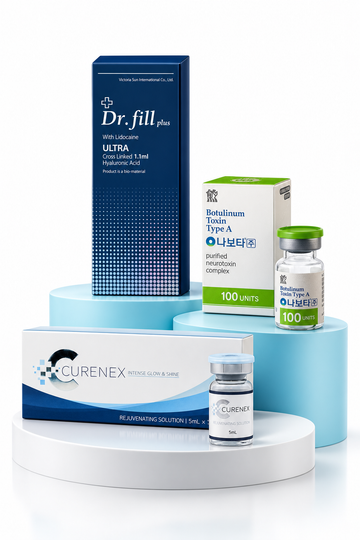
Examples include glass vials, prefilled syringes, ampoules, and cosmetic bottles.
Primary packaging is particularly important because its materials and closure system may influence product compatibility and stability.
Secondary Packaging
Secondary packaging surrounds the primary container and may include an outer carton, protective insert, or additional printed material.
It can provide physical protection and space for labelling and regulatory information.
Not every product uses the same combination of primary and secondary packaging.
Understanding Pharmaceutical Vials
Vials are widely used containers in pharmaceutical manufacturing.
They are commonly made from pharmaceutical-grade glass and may incorporate elastomeric closures and metal seals.
Vials can contain liquid or dried formulations, depending on the finished product.
Within professional aesthetics, vial presentations are associated with several pharmaceutical and specialised product categories.
For example, certain products in Rosvia's Botulinum Toxins collection are supplied in vial presentations.
Vial dimensions, fill quantities, closure systems, and packaging configurations vary between manufacturers.
The physical size of a vial does not independently establish the quantity or biological potency of its contents.
Prefilled Syringe Presentations
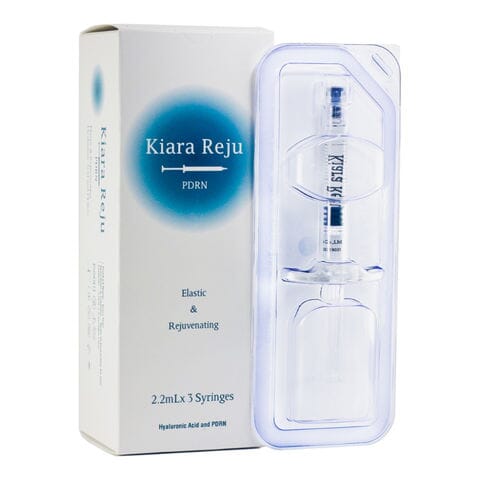
Prefilled syringes are packaging systems in which a formulation is supplied inside a syringe-shaped primary container.
These presentations are frequently associated with hyaluronic acid-based dermal fillers and certain other aesthetic products.
A prefilled syringe may include a barrel, plunger system, closure, and additional components specified by the manufacturer.
The materials used in these systems are selected with consideration for compatibility with the formulation.
Prefilled syringe presentations can differ in nominal volume, container material, closure design, and accompanying packaging.
Products within Rosvia's Hyaluronic Acid Fillers category illustrate this wider packaging format.
Ampoules and Other Containers
Ampoules are another type of container used in pharmaceutical and cosmetic product packaging.
Traditional glass ampoules are sealed containers that are designed as single-use presentations.
Other aesthetic products may be supplied in cosmetic bottles, tubes, sachets, or specialised dispensing containers.
These packaging formats may be associated with topical formulations, skincare products, and other product categories.
The selection of a container depends on factors such as the formulation's physical characteristics, packaging compatibility, intended purpose, and regulatory requirements.
Because packaging formats can appear across different product categories, the container alone does not determine a product's regulatory classification.
Common Packaging Materials
Packaging materials are selected according to the characteristics and requirements of the finished product.
Glass
Glass is widely used in pharmaceutical packaging because of its chemical resistance and suitability for many formulation types.
Different pharmaceutical glass types have different performance characteristics.
Polymers
Polymeric materials are used in certain syringes, containers, closures, and packaging components.
Their suitability depends on the specific material and product formulation.
Elastomers
Elastomeric materials may be used in vial stoppers, syringe plungers, and other closure components.
These materials form part of the container-closure system.
Paperboard and Other Outer Materials
Paperboard cartons, protective inserts, and printed leaflets are commonly used as secondary packaging.
These materials support product presentation, identification, and communication of relevant information.
Labelling and Product Traceability
Product labels communicate information about the identity and characteristics of the finished product.
Depending on the regulatory category, labels may include the manufacturer, product name, batch number, expiry date, nominal quantity, and storage statements.
Batch numbers connect products with manufacturing and quality-control records.
Expiry dates communicate the period for which the manufacturer supports specified product characteristics under defined conditions.
Some products may also feature unique identifiers, barcodes, or other identification systems.
These elements contribute to product traceability, although their exact requirements vary by product category and jurisdiction.
Packaging Across Aesthetic Product Categories
Different aesthetic product categories commonly feature different packaging presentations.
Botulinum Toxin Products
Many botulinum toxin formulations are supplied in pharmaceutical vials with accompanying cartons and product documentation.
Hyaluronic Acid Fillers
Hyaluronic acid fillers are frequently supplied in prefilled syringes, although packaging configurations differ between manufacturers.
Skin Boosters
Products marketed as skin boosters may be supplied in vials, prefilled syringes, ampoules, or cosmetic containers depending on their composition and regulatory category.
Cosmeceutical and Skincare Products
Topical skincare products can use bottles, tubes, jars, sachets, or other cosmetic packaging systems.
These examples illustrate common commercial presentations rather than universal rules for each product category.
Regulatory and Market Differences
Packaging requirements vary between pharmaceuticals, medical devices, and cosmetics.
Medicinal products may be subject to specific labelling and package leaflet requirements.
Medical devices can have different identification and labelling obligations, including requirements associated with applicable device regulations.
Cosmetic products are subject to their own labelling frameworks, which may address ingredient declarations, responsible-person information, and durability statements.
Requirements can also vary between countries and regions.
For example, packaging intended for the European Union may contain different regulatory information from packaging intended for other markets.
Consequently, a product's packaging should be understood in the context of its regulatory classification and authorised market.
Packaging Format Comparison
The following table summarises several common packaging formats used across professional aesthetic product categories.
| Packaging Format | General Characteristics | Common Product Categories |
|---|---|---|
| Glass vial | Rigid container with a specialised closure system | Biological pharmaceuticals and other specialised formulations |
| Prefilled syringe | Formulation supplied in a syringe-shaped primary container | Hyaluronic acid fillers and certain skin boosters |
| Glass ampoule | Sealed container commonly associated with single-use presentations | Selected pharmaceutical and cosmetic formulations |
| Cosmetic bottle | Container designed for liquid or semi-liquid topical products | Skincare and cosmetic formulations |
| Outer carton | Secondary packaging providing protection and labelling space | Pharmaceuticals, medical devices, and cosmetics |
| Package leaflet | Printed documentation accompanying certain products | Medicinal products and other regulated categories |
Packaging formats may overlap between product categories. The presentation alone does not establish regulatory classification, product quality, or intended use.
Final Thoughts
Professional aesthetic product packaging includes a wide range of containers and supporting materials, from pharmaceutical vials and prefilled syringes to ampoules, cartons, and product documentation.
Each packaging format has characteristics related to product containment, identification, protection, and compatibility with the finished formulation.
Understanding these distinctions provides useful context for interpreting manufacturer catalogues, packaging descriptions, and product labels.
Because requirements differ across pharmaceuticals, medical devices, and cosmetics, packaging should always be understood as part of the product's wider technical and regulatory identity.
This article is intended exclusively for general professional education. It does not provide treatment recommendations, administration instructions, clinical protocols, or prescribing guidance.
Rosvia provides licensed aesthetic professionals with access to professional aesthetic product categories and relevant product information. Explore our Botulinum Toxins and Hyaluronic Acid Fillers collections, learn more about Rosvia, or contact our team for professional product enquiries.