
Carrinho
0
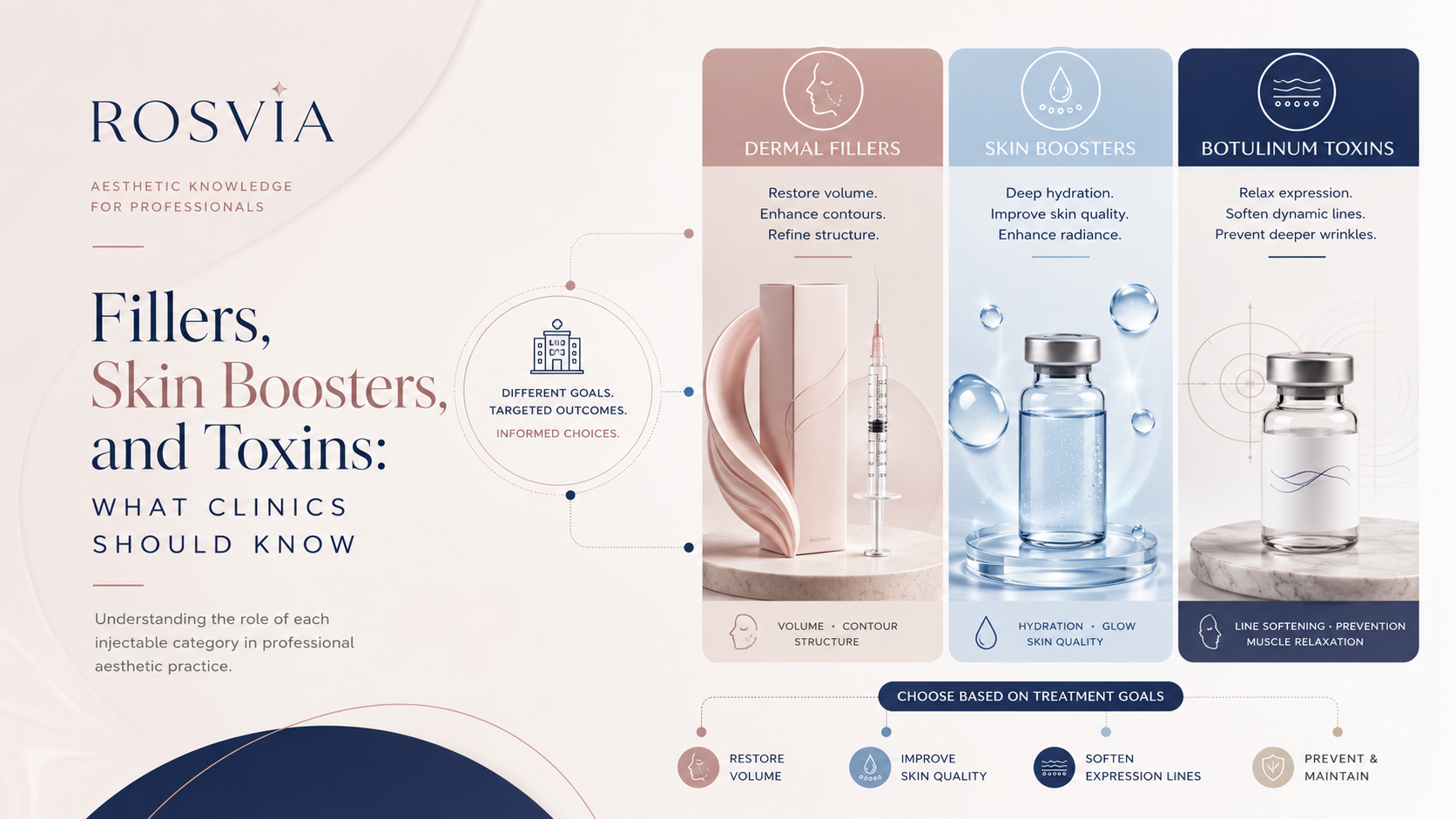
Fillers, Skin Boosters, and Toxins: What Clinics Should Know
Professional aesthetic clinics often work with several injectable product categories, but each one serves a different purpose. Dermal fillers, skin boosters, and botulinum toxins should not be viewed as the same type of product.
Understanding the role of each category helps clinics plan treatments more clearly, organise stock more efficiently, and choose products that match specific professional goals.
In this article
- Why injectable categories matter
- When clinics consider dermal fillers
- How skin boosters support skin quality
- Where botulinum toxins fit in treatment planning
- Why clinics compare product categories
- Building a balanced clinic stock plan
- Final thoughts
Why injectable categories matter
Each injectable category is designed with a different professional purpose in mind. Some products are selected for volume and structure, others for skin quality support, and others for managing dynamic facial movement within professional aesthetic protocols.
For clinics, this distinction matters because product choice should match the treatment goal. A product used for facial volume support will not serve the same function as a skin booster, and a toxin-based treatment requires a different planning approach from filler-based correction.
When clinics consider dermal fillers
Dermal fillers are commonly considered when clinics plan treatments around volume, contour, facial balance, and structural support. Depending on the product type, fillers may be used in professional protocols involving areas such as the cheeks, jawline, chin, lips, or deeper folds.
Professional buyers can review Rosvia’s dermal fillers, hyaluronic acid fillers, and European fillers when comparing products for different clinic needs.
For clinics working with biostimulatory filler planning, OLIDIA may be reviewed as part of a broader professional product selection, depending on the clinic’s treatment approach and practitioner preference.
How skin boosters support skin quality
Skin boosters are generally considered when the treatment goal focuses more on skin quality than structure. Clinics may include them in protocols related to hydration, texture, radiance, elasticity, and overall skin freshness.
This category can be especially useful when clients are not looking for strong volume correction but still want visible improvement in skin appearance. Rosvia’s skin booster category gives clinics access to professional-use products that support this type of treatment planning.
Products such as HANHEAL Facial Exosome and CLAIR EYES may be considered by clinics preparing skin-focused treatment options or reviewing their skin booster stock.
Where botulinum toxins fit in treatment planning
Botulinum toxins are different from fillers and skin boosters because they are commonly associated with treatment planning around muscle activity and dynamic facial lines. Clinics may use toxin-based products within professional protocols involving expression-related areas and facial movement management.
Because toxins require careful handling and professional judgement, clinics usually review this category separately from fillers and boosters. Rosvia’s botulinum toxins category allows professional buyers to compare toxin options for clinic stock planning.
Products such as BOTULAX 300 Units and Rentox 100 Units can be reviewed by clinics managing toxin-related treatment needs.
Why clinics compare product categories
Clinics often compare fillers, skin boosters, and toxins because client goals are not always limited to one concern. Some treatment plans may focus on volume, while others may focus on skin hydration, facial movement, or a combined approach over time.
Understanding the difference between product categories helps clinics avoid using one product type for every aesthetic concern. It also supports more thoughtful treatment planning, clearer client consultations, and better internal stock organisation.
Building a balanced clinic stock plan
A balanced clinic stock plan usually includes products that support different treatment goals. This may involve keeping filler options for volume and contour, skin boosters for skin quality, and toxins for dynamic wrinkle-related protocols.
Reliable sourcing also matters. Clinics benefit from working with suppliers that organise categories clearly, provide product information professionally, and make it easier to plan repeat orders. If a clinic needs support with product selection or larger purchasing needs, the Rosvia contact page provides a direct way to reach the team.
Final thoughts
Dermal fillers, skin boosters, and botulinum toxins each play a different role in professional aesthetic practice. Understanding these differences helps clinics choose products more carefully and organise treatment planning with greater confidence.
Rosvia supports clinics and licensed professionals with organised aesthetic product categories, reliable sourcing, and professional buyer support. For clinics building a more complete injectable product routine, knowing when and why to use each category is an important part of long-term clinical planning.