
Carrinho
0
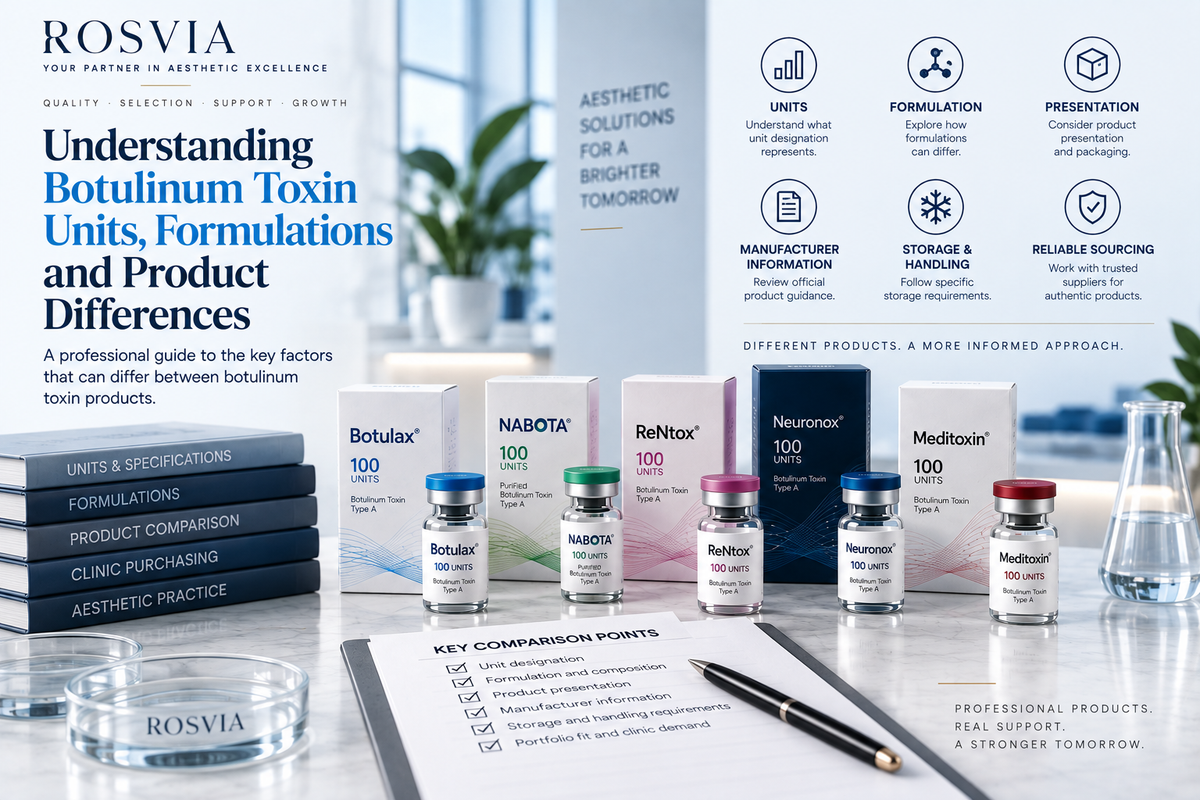
Understanding Botulinum Toxin Units, Formulations and Product Differences
Professional botulinum toxin products are often discussed as a single category, but individual products can have important differences. Unit designation, formulation, presentation, manufacturer specifications, storage requirements, and supporting product information can vary from one option to another.
For aesthetic professionals and clinic buyers, understanding these differences is important when evaluating products for a professional portfolio. Rather than assuming that products with similar names, presentations, or unit numbers are equivalent, each option should be assessed according to its own official product information and manufacturer guidance.
In This Article
- What do botulinum toxin units represent?
- Why unit numbers should not be compared in isolation
- How formulations can differ between products
- Why product presentation matters
- Manufacturer guidance remains essential
- Storage and handling can also differ
- What professional buyers should compare
- Final thoughts
What Do Botulinum Toxin Units Represent?
One of the most visible characteristics of a botulinum toxin product is its unit designation. Professional products may be offered in different unit presentations, and this information forms part of the specification of the individual product.
However, a unit should be understood within the context of the specific product and its manufacturer information. The unit designation printed on one product should not automatically be interpreted as an equivalent measure for another botulinum toxin product.
For this reason, professional buyers should use the official documentation associated with each product rather than relying on the unit number alone when comparing options.
Why Unit Numbers Should Not Be Compared in Isolation
It can be tempting to compare products primarily by the number of units displayed on their packaging. From a purchasing perspective, however, this provides only one part of the product information.
Products within the botulinum toxin category may have their own specifications and manufacturer-defined characteristics. A higher or lower number displayed on a vial therefore does not, by itself, establish that one product is stronger, weaker, better value, or directly interchangeable with another.
A more useful professional comparison considers unit designation together with formulation, manufacturer, presentation, official product information, storage requirements, and the clinic's own purchasing criteria.
How Formulations Can Differ Between Products
Formulation is another area where professional botulinum toxin products may differ. Although products may belong to the same broad category, their complete formulations and product-specific characteristics should be reviewed individually.
Clinics evaluating a new option can examine the information supplied for that particular product, including its stated composition and other formulation details provided by the manufacturer.
These differences are one reason why professional buyers should avoid treating every product within a category as automatically identical. Rosvia's Botulinum Toxins collection allows qualified professionals to explore different options and review products according to their individual purchasing requirements.
Why Product Presentation Matters
Product presentation includes characteristics such as vial format, labelled unit quantity, packaging, and the information supplied with the product. These details can influence how a clinic evaluates and organises its professional inventory.
For purchasing teams, presentation can also affect stock planning. A clinic should consider what it regularly orders, what its qualified professionals require, and whether a particular product presentation fits existing purchasing and inventory patterns.
Product presentation should therefore be evaluated as part of the complete product profile rather than viewed independently from formulation, units, manufacturer information, and clinic demand.
Manufacturer Guidance Remains Essential
Online discussions and product comparisons can provide general category awareness, but they should not replace the official information associated with an individual professional product.
Manufacturer documentation is particularly important because product specifications can differ. Clinics should review the applicable product information for the specific option being considered and follow the relevant professional guidance rather than applying assumptions from another brand or formulation.
This product-specific approach is especially important when a clinic introduces an unfamiliar botulinum toxin product into its portfolio.
Storage and Handling Can Also Differ
Product differences are not limited to units and formulation. Storage and handling requirements are another important part of professional product evaluation.
Clinics should review the manufacturer's applicable storage information for each individual product and ensure that their receiving and inventory procedures are appropriate for the products they purchase.
Delivery planning also forms part of this process. Clinics purchasing through Rosvia can review general fulfilment and delivery information through the Shipping Policy before placing an order.
What Professional Buyers Should Compare
When comparing botulinum toxin products for professional purchasing, clinics can take a broader approach than simply comparing brand names or prices.
Useful comparison points can include the product name and manufacturer, unit designation, formulation information, presentation, official documentation, storage requirements, sourcing, availability, and how the product fits within the clinic's existing professional portfolio.
Price can remain part of the purchasing decision, but evaluating the complete product profile provides better context than comparing cost or units alone.
This structured approach can also make future purchasing decisions easier because the clinic develops consistent criteria for evaluating both existing products and new options entering its portfolio.
Final Thoughts
Botulinum toxin products may sit within the same professional category, but this does not mean their units, formulations, presentations, or other specifications should automatically be considered equivalent. Each product needs to be understood according to its own manufacturer information and professional documentation.
For clinic buyers, recognising these differences supports a more systematic approach to product evaluation. Units can be considered alongside formulation, presentation, storage requirements, sourcing, availability, and overall portfolio fit rather than being used as the only comparison point.
Rosvia supports licensed aesthetic professionals with access to a carefully selected range of professional aesthetic products, reliable sourcing, clear product discovery, dependable fulfilment, and dedicated purchasing support.
Explore Rosvia's Botulinum Toxins collection, review current opportunities on the Offers Page, check fulfilment information in the Shipping Policy, or contact Rosvia for professional purchasing assistance.