
Chariot
0
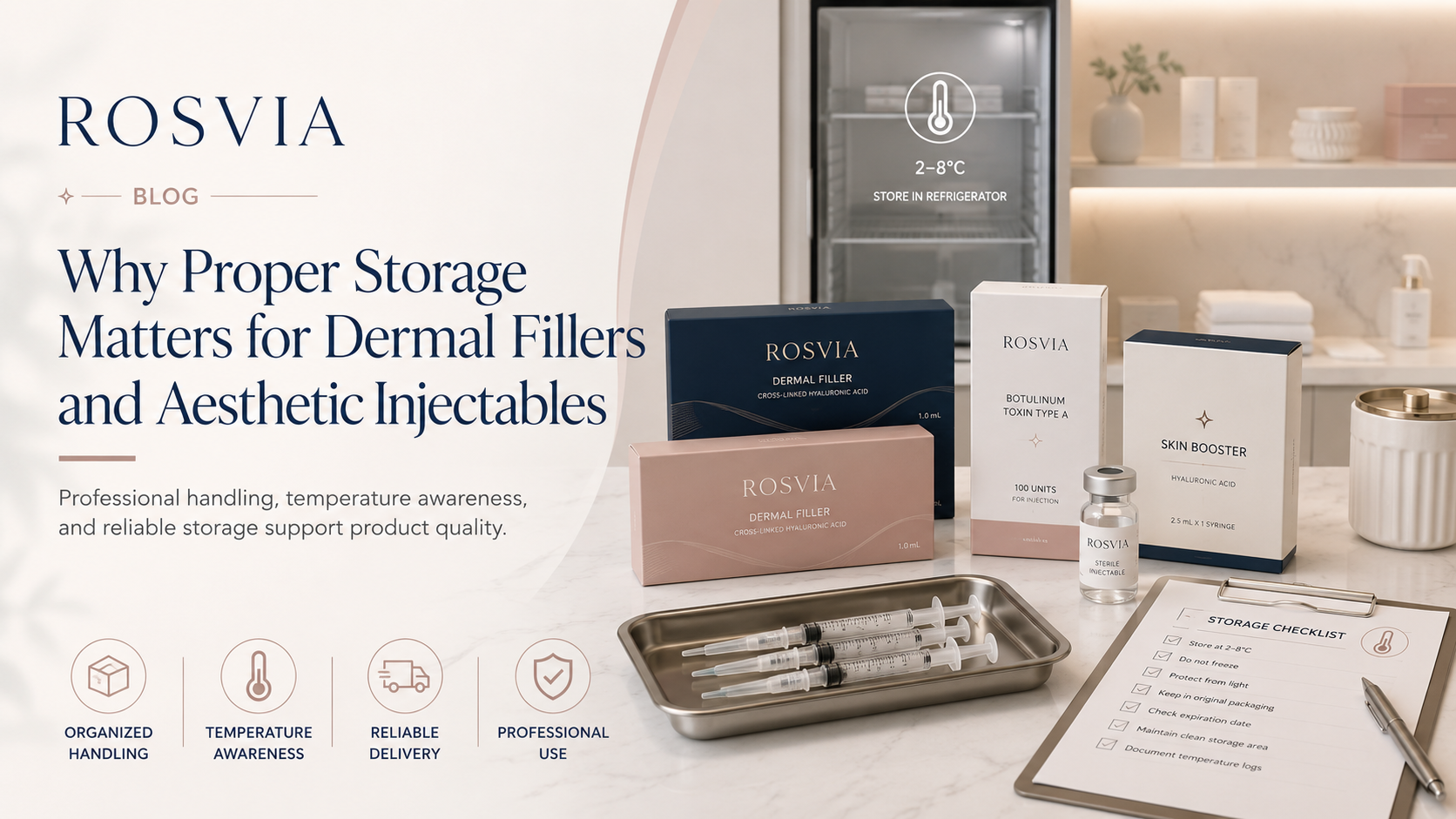
Proper storage is an important part of professional aesthetic practice. For clinics, product quality does not only depend on what is ordered, but also on how products are handled, received, stored, and prepared before use.
When clinics work with dermal fillers, skin boosters, botulinum toxins, and other aesthetic injectables, careful storage habits help support product consistency, treatment planning, and overall professional confidence.
In this article
- Why storage is part of product quality
- Handling dermal fillers in clinic settings
- Storage awareness for skin boosters and exosomes
- Temperature care for botulinum toxins
- Why shipping and delivery information matter
- Common storage mistakes clinics should avoid
- Final thoughts
Why storage is part of product quality
For aesthetic clinics, storage is not a small detail. It is part of the full product journey from supplier to treatment room. Products should be handled in a way that respects their intended condition, packaging, and professional-use requirements.
This is especially important when clinics manage several product categories at once, such as dermal fillers, skin boosters, and botulinum toxins. Each category may have different handling expectations, so clinics benefit from having clear internal routines.
Handling dermal fillers in clinic settings
Dermal fillers should be stored according to the product’s own packaging guidance and professional handling expectations. Clinics should avoid exposing products to unnecessary heat, direct sunlight, or unstable storage conditions.
Products such as OLIDIA may be part of a clinic’s filler selection for professional treatment planning, so careful storage helps maintain confidence from order arrival to clinical use. Clinics working with hyaluronic acid fillers or European fillers should also keep product organisation clear, especially when managing multiple boxes, batches, or treatment categories.
Storage awareness for skin boosters and exosomes
Skin boosters and exosome-focused products are often selected for skin quality, hydration, texture, and overall rejuvenation support. Because these products are used in professional treatment planning, clinics should pay close attention to storage instructions and product condition after delivery.
Products such as HANHEAL Facial Exosome and CLAIR EYES should be managed with organised stock control and careful handling. This helps clinics maintain a reliable workflow when preparing products for scheduled appointments.
Temperature care for botulinum toxins
Botulinum toxins require particular attention because handling and temperature awareness are central to professional product management. Clinics should always follow the product’s storage guidance and avoid leaving toxin products in unsuitable environments.
For clinics sourcing products such as BOTULAX 300 Units or Rentox 100 Units, clear receiving routines are important. This includes checking the order on arrival, reviewing the packaging condition, and moving products into the correct clinic storage area as soon as possible.
Why shipping and delivery information matter
Shipping is part of the storage conversation because the delivery process affects how clinics receive and organise their products. Clear shipping information helps clinics plan for order arrival and reduce unnecessary delays in stock handling.
Before placing an order, professional buyers should review the Rosvia Shipping Policy to understand delivery expectations and order handling information. When clinics understand the delivery process clearly, it becomes easier to prepare for product arrival and manage stock responsibly.
Transparent after-sale information also supports buyer confidence. The Refund, Return, and Replacement Policy gives clinics useful guidance on how different order situations are handled.
Common storage mistakes clinics should avoid
One common mistake is treating all aesthetic injectables the same. Dermal fillers, skin boosters, and botulinum toxins may have different storage expectations, so clinics should avoid using one general routine for every product category.
Another mistake is failing to organise stock after delivery. Products should be checked, recorded, and stored in the correct area promptly. Clinics should also avoid keeping products near heat sources, windows, or shared spaces where temperature and handling may be less controlled.
If a clinic is unsure about product selection, order planning, or sourcing support, the Rosvia contact page provides a direct way to reach the team for professional assistance.
Final thoughts
Proper storage supports product confidence, clinic organisation, and professional treatment planning. For aesthetic clinics, responsible handling begins before the product reaches the treatment room and continues through receiving, storage, preparation, and stock management.
Rosvia supports clinics and licensed professionals with organised product categories, clear communication, and reliable sourcing for professional aesthetic products. Whether clinics are working with dermal fillers, skin boosters, or botulinum toxins, proper storage remains an essential part of a responsible purchasing and treatment routine.