
العربة
0
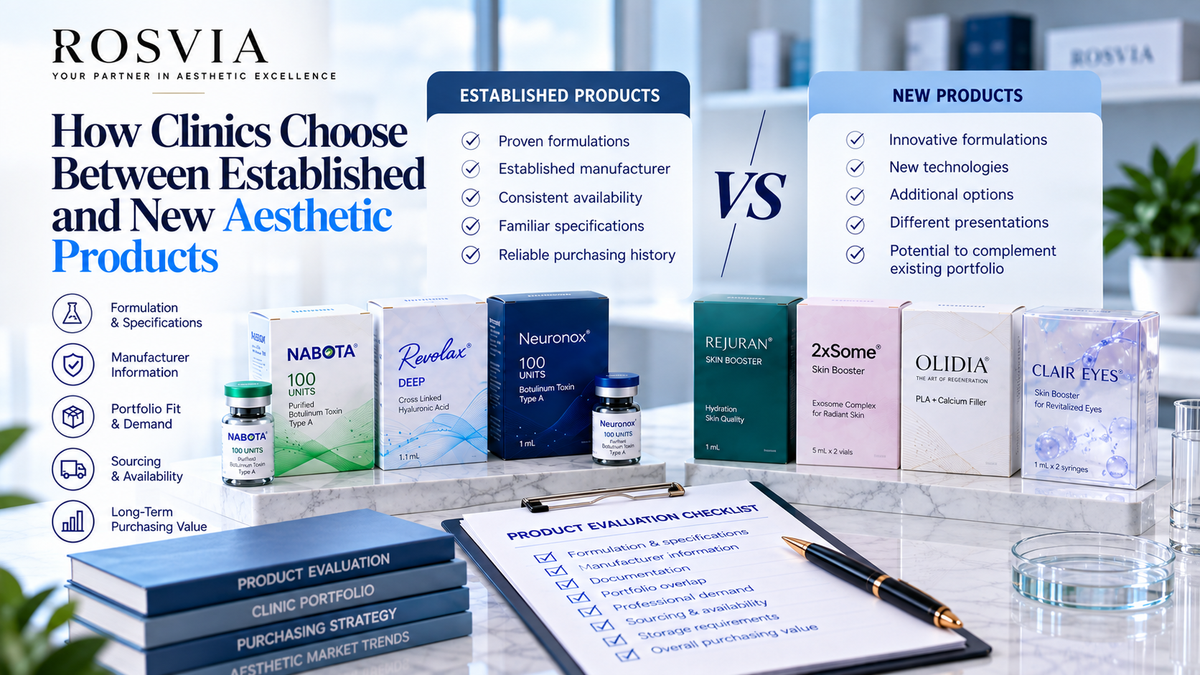
The professional aesthetic market continues to evolve, with new brands, formulations, and product technologies regularly becoming available alongside products that clinics may already know and purchase. For professional buyers, this creates an important question: when does a new product deserve a place in the clinic's existing portfolio?
Being new does not automatically make a product better, just as being established does not automatically make a product the right choice for every clinic. A more structured evaluation considers formulation, manufacturer information, product specifications, professional demand, sourcing, availability, and how the product complements what the clinic already purchases.
In This Article
- Why established products remain important
- What makes new products worth evaluating
- Compare formulation and specifications
- Review manufacturer and product information
- Identify overlap with the existing portfolio
- Consider professional demand
- Evaluate sourcing and availability
- Introduce new products with a measured approach
- Review purchasing performance over time
- Final Thoughts
Why Established Products Remain Important
Established products can provide clinics with something particularly valuable: familiarity. When a product has formed part of a clinic's professional portfolio for an extended period, purchasing teams may already understand its specifications, manufacturer information, storage requirements, availability, and normal reorder pattern.
Previous purchasing history can also help clinics estimate how frequently the product needs to be replenished and whether it continues to correspond with current professional requirements.
This does not mean an established product should remain in the portfolio indefinitely simply because it has been purchased before. Instead, its existing history provides useful information that can be considered when comparing it with newer alternatives.
What Makes New Products Worth Evaluating
New professional aesthetic products can introduce different formulations, technologies, presentations, or product characteristics to the market. For clinics, this can create opportunities to expand or refine an existing portfolio.
However, novelty alone is not a strong reason to purchase a product. A more useful question is whether the new option provides something relevant that the clinic's current portfolio does not already offer.
This might involve a different formulation, product category, presentation, manufacturer technology, or another characteristic that corresponds with an identified professional requirement.
Exploring organised categories such as Rosvia's Hyaluronic Acid Fillers, Skin Boosters, Botulinum Toxins, and PLA & Calcium Fillers can help professional buyers compare different available options within the appropriate category.
Compare Formulation and Specifications
When evaluating a new product against an established option, clinics should compare the actual product characteristics rather than relying primarily on branding or market visibility.
Depending on the category, useful information may include composition, concentration where applicable, formulation technology, presentation, quantity, unit designation, packaging, storage requirements, and other product-specific specifications.
Two products belonging to the same broad category can still differ considerably. A newer option should therefore be evaluated according to what it actually contains and how it is presented rather than simply being treated as a direct substitute for an existing product.
Review Manufacturer and Product Information
Manufacturer information provides additional context when considering a product that is unfamiliar to the clinic.
Professional buyers can review who manufactures the product, what product-specific information is available, how the formulation is described, and what applicable documentation accompanies the product.
This is particularly important with newer products because clinics may have less previous purchasing experience to rely upon. Clear product information can help buyers understand what they are evaluating before deciding whether the product belongs in the clinic's portfolio.
Manufacturer information and applicable product-specific documentation should take priority over assumptions created by trends, informal comparisons, or general online discussions.
Identify Overlap With the Existing Portfolio
Before adding another product, clinics can review whether it provides a genuinely different option or simply duplicates something already available in the existing portfolio.
Some overlap can be useful when there is a clear professional or purchasing reason for maintaining alternatives. Excessive overlap, however, can increase inventory complexity and spread purchasing across several products serving very similar roles.
One practical approach is to identify the specific portfolio gap the new product is expected to fill. If that purpose cannot be clearly defined, the clinic may want to evaluate whether adding another product is necessary.
Consider Professional Demand
A product can have interesting specifications without necessarily corresponding with the clinic's actual requirements. Professional demand should therefore form part of the decision.
Clinics can review purchasing history, existing product usage, current professional requirements, and whether there is a practical reason to introduce another option.
This helps separate genuine portfolio development from purchasing driven primarily by novelty or market attention.
Established products with consistent demand may remain important core inventory, while newer products can be considered where they provide a meaningful addition to the range.
Evaluate Sourcing and Availability
Product selection is only one part of professional purchasing. Clinics also need to consider whether a product can be sourced through a reliable professional channel and whether future availability supports ongoing purchasing.
This can be particularly relevant for newer products. If an option becomes important to the clinic's portfolio, buyers need to consider whether it can be replenished consistently rather than evaluating only its initial availability.
Supplier transparency, communication, fulfilment expectations, product information, and purchasing support should therefore form part of the evaluation.
Clinics purchasing through Rosvia can review general delivery information through the Shipping Policy or contact Rosvia when additional purchasing assistance is required.
Introduce New Products With a Measured Approach
Adding a new product to the portfolio does not necessarily require making it a major inventory item immediately. Clinics can take a measured purchasing approach while they determine how the product fits within their broader professional requirements.
This can help avoid committing excessive inventory budget before there is enough purchasing history to understand whether the product deserves a permanent place within the clinic's range.
The appropriate purchasing quantity will depend on the individual product, applicable storage and shelf-life information, clinic requirements, and normal inventory practices.
Review Purchasing Performance Over Time
The evaluation should continue after a new product enters the portfolio. Over time, clinics can review whether the product is being purchased consistently, whether it remains relevant to professional requirements, and how easily it can be replenished.
The same review should also be applied to established products. A long purchasing history does not mean that a product should automatically continue receiving the same inventory priority.
Regular portfolio reviews allow professional buyers to identify which products have become core purchases, which remain specialised options, and which may no longer justify their existing stock allocation.
This creates a product portfolio that evolves according to actual requirements rather than simply becoming larger whenever new options enter the market.
Final Thoughts
Choosing between established and new aesthetic products should not be framed as a choice between old and new. Both can have a valuable place within a professional portfolio when they correspond with genuine clinic requirements.
Established products provide purchasing history and familiarity, while newer products can introduce different formulations, technologies, presentations, or professional options. The strongest purchasing decision comes from comparing these characteristics alongside manufacturer information, demand, portfolio overlap, sourcing, availability, and inventory requirements.
By evaluating new products carefully and continuing to review established ones, aesthetic clinics can build a professional portfolio that evolves without creating unnecessary complexity.
Rosvia supports licensed aesthetic professionals with organised product collections, reliable sourcing, dependable fulfilment, and professional purchasing support across established and emerging aesthetic product categories.
Explore Rosvia's Hyaluronic Acid Fillers, Skin Boosters, Botulinum Toxins, and PLA & Calcium Fillers, review current opportunities on the Offers Page, or contact Rosvia for professional purchasing assistance.