
Einkaufswagen
0
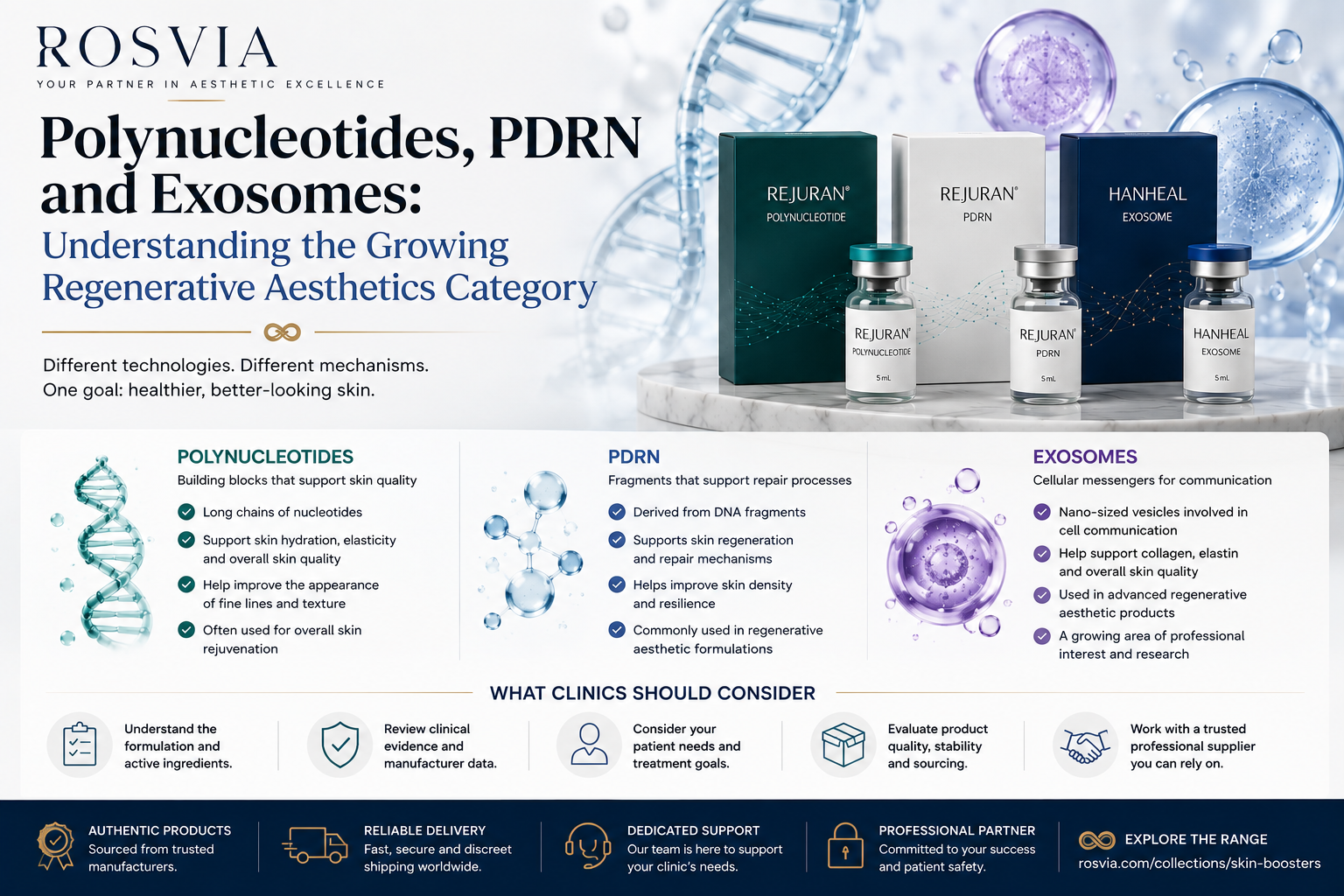
Polynucleotides, PDRN and Exosomes: Understanding the Growing Regenerative Aesthetics Category
Regenerative aesthetics is becoming an increasingly visible area within professional aesthetic practice, bringing greater attention to products based around polynucleotides, PDRN, exosomes, and other advanced formulations.
Although these terms are frequently discussed together, they do not describe the same technology or product category. Understanding their differences can help aesthetic clinics evaluate formulations more carefully and make more informed decisions when developing their professional product range.
In This Article
- Understanding regenerative aesthetics
- What are polynucleotides?
- Understanding PDRN
- Understanding exosome-based products
- Why these categories should not be treated the same
- What clinics should consider
- Building regenerative aesthetics into a product portfolio
- Final thoughts
Understanding Regenerative Aesthetics
Regenerative aesthetics is a broad term used around approaches that focus on skin quality and biological processes associated with tissue renewal and repair. Rather than describing one specific treatment or ingredient, the category can include several different technologies and formulations.
For professional clinics, this makes product evaluation particularly important. Products associated with regenerative aesthetics should be considered according to their composition, intended professional use, manufacturer information, and the role they may play within the clinic's wider treatment offering.
Clinics exploring this area can also review Rosvia's Skin Boosters collection, which includes different professional skin-quality and regenerative-focused product categories.
What Are Polynucleotides?
Polynucleotides are chains of nucleotides, the structural units that make up nucleic acids. Within professional aesthetics, polynucleotide-based formulations have become increasingly prominent within discussions surrounding skin quality and regenerative-focused approaches.
Individual products can differ in formulation, concentration, presentation, and intended application. For this reason, the term “polynucleotide” alone does not provide enough information to determine how a particular product should fit within professional treatment planning.
Products within the Rejuran range provide an example of polynucleotide-focused options that professional buyers may encounter when developing their clinic's skin-quality portfolio.
Understanding PDRN
PDRN, or polydeoxyribonucleotide, is another term increasingly encountered within regenerative aesthetics. While PDRN and polynucleotides are sometimes discussed together, professionals should avoid assuming that the terms describe identical formulations.
The composition, processing, concentration, product specifications, and manufacturer guidance of individual formulations remain important considerations when comparing available options.
For clinics, understanding the actual product rather than relying solely on category terminology can help create more informed purchasing and treatment-planning decisions.
Understanding Exosome-Based Products
Exosome-based formulations represent another developing area within regenerative and skin-quality aesthetics. Exosomes are extracellular vesicles involved in communication between cells, which has contributed to growing professional and scientific interest in their potential applications.
However, products described as exosome-based can vary considerably. Source, formulation, processing, presentation, intended use, and supporting manufacturer information should therefore be reviewed carefully when evaluating individual products.
HANHEAL Facial Exosome is one example of an exosome-focused product available within Rosvia's professional aesthetic range.
Why These Categories Should Not Be Treated the Same
Polynucleotides, PDRN and exosomes are frequently grouped under the wider regenerative aesthetics conversation, but they represent different biological materials and formulation approaches.
Treating them as interchangeable can oversimplify important differences between individual products. Clinics should instead understand what each formulation contains, how the manufacturer positions its intended professional use, and whether the product provides a distinct role within the clinic's existing portfolio.
This becomes increasingly important as regenerative aesthetics expands and more products enter the professional market.
What Clinics Should Consider
When evaluating regenerative-focused products, clinics can begin with the same principles used across professional aesthetic purchasing: understand the treatment objective, review the complete formulation, evaluate manufacturer documentation, and consider how the product fits within existing clinic protocols and practitioner expertise.
Product authenticity and sourcing are also important considerations. Advanced formulations should be purchased through dependable professional channels where product information, storage expectations, fulfilment, and communication are clearly established.
Rather than selecting products because a particular ingredient or technology is trending, clinics can focus on whether the formulation genuinely supports a defined requirement within their professional offering.
Building Regenerative Aesthetics Into a Product Portfolio
Regenerative-focused products can complement rather than replace existing skin-quality categories. Clinics may maintain hydration-focused skin boosters alongside selected polynucleotide, PDRN, exosome-based, or other advanced formulations according to treatment demand and practitioner requirements.
A structured approach helps prevent unnecessary product overlap while giving practitioners access to different formulation categories where appropriate.
As demand develops, clinics can gradually expand their selection based on actual usage rather than attempting to stock every emerging regenerative product at once.
Final Thoughts
Polynucleotides, PDRN and exosomes are helping broaden the professional conversation around regenerative aesthetics, but understanding the differences between these categories is essential. Each represents a different formulation approach and should be evaluated according to the specific product rather than the popularity of the terminology surrounding it.
By considering composition, intended use, manufacturer guidance, professional requirements, and reliable sourcing, aesthetic clinics can approach this growing category with greater structure and purchasing confidence.
Rosvia supports licensed aesthetic professionals with carefully selected skin-quality and regenerative-focused products from established manufacturers, dependable fulfilment, and professional purchasing support.
Browse Rosvia's Skin Boosters collection, explore current opportunities on the Offers Page, review delivery information in the Shipping Policy, or contact our team through the Contact Page for professional purchasing assistance.